Scuba Diving Nusa Penida for an Amazing Ocean Adventure
Scuba diving Nusa Penida offers an exciting way to explore Bali’s underwater world. Located southeast of mainland Bali, this island is known for its coral reefs, tropical fish, manta rays, and seasonal opportunities to encounter the ocean sunfish, also called the mola-mola. For travelers who enjoy marine life, the island provides a memorable diving destination with a variety of underwater landscapes.
However, a rewarding scuba diving experience involves more than beautiful scenery. Water conditions, local currents, dive site selection, and professional guidance all play an important role. By understanding these factors before booking, divers can choose a suitable experience and enjoy the ocean more responsibly.
What Makes Scuba Diving Nusa Penida Special?
One of the main reasons divers visit the island is its rich marine environment. Scuba diving Nusa Penida provides opportunities to observe coral formations, reef fish, sea turtles, and larger marine animals in their natural habitat.
The underwater landscape also varies between locations. Some sites feature sloping coral reefs, while others are known for deeper water and drift diving. As a result, each dive can offer a different experience depending on the location and sea conditions.
Marine encounters are never guaranteed. Nevertheless, observing reef fish, improving buoyancy, and appreciating the underwater environment can make every dive worthwhile. Divers should also avoid touching coral or disturbing marine animals to help protect these fragile ecosystems.
Popular Scuba Diving Sites in Nusa Penida
Nusa Penida has several well-known dive sites, each offering different underwater conditions and marine life opportunities. Choosing the right location depends on your certification, experience, interests, and the assessment of your dive guide.
Manta Point
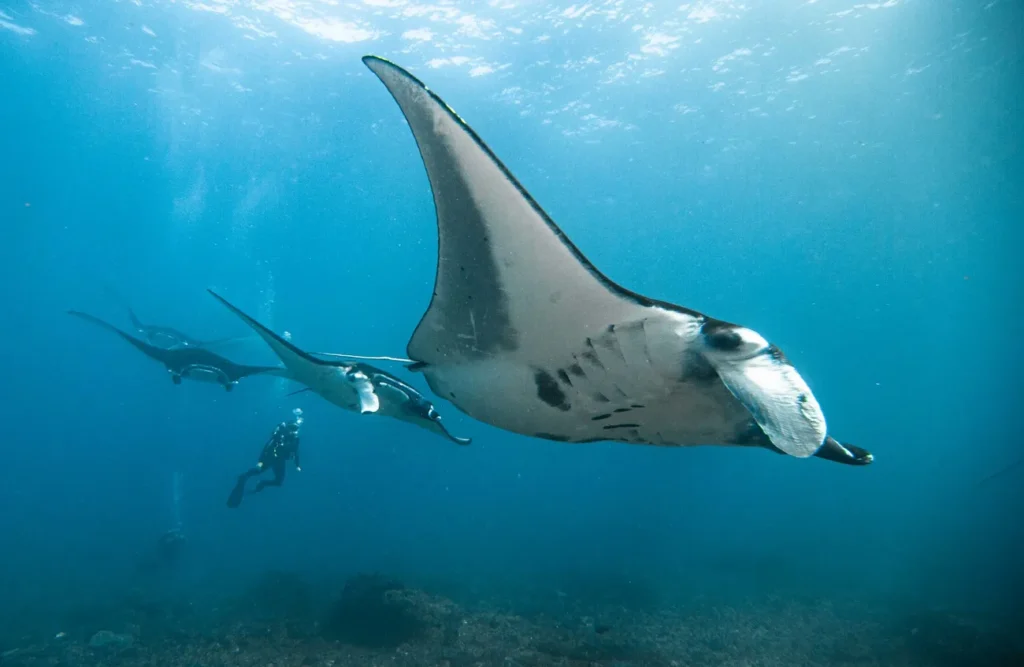
Manta Point is one of the best-known locations for encountering manta rays. These graceful marine animals may visit natural cleaning stations, where smaller fish remove parasites from their bodies.
During a dive, manta rays may glide through the water or circle a cleaning area. However, sightings depend on natural conditions and animal behavior.
For a responsible experience, maintain an appropriate distance and never touch, chase, or block a manta ray. In addition, listen carefully to your guide because currents, waves, and visibility can affect whether a dive is suitable.
Crystal Bay
Crystal Bay is known for its underwater scenery and seasonal opportunities to see the mola-mola. This large ocean sunfish attracts experienced divers who want to observe a remarkable marine species in its natural habitat.
Despite its name, Crystal Bay does not always have clear visibility. Conditions can change with tides, weather, and underwater currents.
Some areas also feature significant depth changes and challenging currents. Therefore, beginners should not assume that the site is suitable simply because the sea surface looks calm. A qualified dive professional should assess the conditions before the dive.
SD Point and Ped
SD Point and Ped are popular locations for exploring coral reefs and observing tropical fish. Depending on the conditions, divers may also experience drift diving along sections of the reef.
During a drift dive, divers move with the current while maintaining their planned depth and staying with the group. This activity requires good buoyancy control, clear communication, and a detailed safety briefing.
Before entering the water, make sure you understand the planned route, entry and exit procedures, and instructions for staying with your dive group.
Marine Life You May Encounter
Marine biodiversity is another reason scuba diving Nusa Penida appeals to underwater enthusiasts. The species you encounter may differ between dive sites and even between two dives at the same location.
Here are some marine highlights to look out for:
- Manta rays: Large rays that glide through open water and may visit cleaning stations.
- Mola-mola: Ocean sunfish that may appear during certain seasonal periods.
- Sea turtles: Marine reptiles that can sometimes be seen swimming or feeding around suitable habitats.
- Tropical reef fish: Colorful species with different shapes, patterns, and behaviors.
- Coral reefs: Complex underwater habitats that support many marine organisms.
Although these encounters can be exciting, wild animals follow their own natural patterns. A responsible operator will explain realistic expectations instead of promising sightings.
Furthermore, divers should observe marine life without touching, feeding, or chasing animals. Maintaining good buoyancy also helps prevent accidental damage to coral reefs.
Understanding Currents and Diving Difficulty
Nusa Penida’s waters are influenced by tides and regional ocean conditions. Consequently, currents can vary by location, time, and weather. Water temperatures and visibility may also change throughout the day.
These conditions make dive site selection particularly important. Beginners should choose a program that matches their abilities rather than attempting a challenging site because it is popular.
Before the dive, ask your guide to explain the maximum planned depth, entry and exit points, underwater communication signals, and emergency procedures. You should also understand what to do if you become separated from the group.
Equally important, be willing to change your plans when conditions are unsuitable. A professional operator should prioritize safety over a fixed itinerary or the expectation of visiting a particular site.
Is Scuba Diving Nusa Penida Suitable for Beginners?
Scuba diving Nusa Penida can be an option for beginners, provided they choose an appropriate program and meet the operator’s requirements. Travelers without a diving certification may be able to join an introductory experience, such as Discover Scuba Diving, under qualified supervision.
An introductory program differs from independent recreational diving. Beginners need appropriate instruction, basic skills practice, and direct supervision according to the applicable training standards.
Meanwhile, certified divers should select sites that match their qualifications and experience. A certification alone does not mean every dive site is suitable for every diver.
Before booking, share your certification level, previous diving experience, date of your last dive, and relevant health considerations with the operator. This information helps the team recommend an appropriate activity and identify any additional requirements.
How to Prepare for Your Diving Trip
Good preparation can make your diving experience more comfortable and organized. Before departure, confirm the meeting point, transportation arrangements, equipment provisions, and expected duration of the activity.
Use this checklist to prepare for your trip:
- Bring a towel, a change of clothes, and sun protection for after diving.
- Provide accurate information about your certification and diving history.
- Check your mask, regulator, buoyancy control device (BCD), weights, and other required equipment with your guide.
- Listen carefully to the briefing about currents, depth limits, dive duration, and emergency procedures.
- Tell the operator if you feel unwell or are uncomfortable with the planned activity.
- Follow current diving guidance on flying after a dive, including the recommended no-fly interval.
In addition, ask which services are included in your booking. Equipment rental, transportation, meals, and other arrangements can differ between operators.
Remember that suitable equipment does not replace proper training. Understanding your gear and following established procedures are essential parts of responsible diving.
Choosing a Safe and Responsible Dive Operator
Choosing the right operator is an important part of planning scuba diving Nusa Penida. Instead of comparing prices alone, consider professional qualifications, equipment maintenance, supervision arrangements, and safety procedures.
A reliable operator should explain the planned dive, discuss relevant risks, and conduct equipment checks before entering the water. The team should also adjust the itinerary when sea conditions change.
Before confirming your booking, ask about group sizes, instructor or guide qualifications, included equipment, and policies for weather-related cancellations. You should also make sure the operator understands your experience level.
Environmental responsibility matters just as much. Avoid touching coral, feeding marine animals, or pursuing wildlife for photographs. Follow your guide’s instructions and maintain enough distance to allow animals to move freely.
By choosing a responsible operator, you help support safer diving practices and the long-term protection of Nusa Penida’s marine environment.
When Is the Best Time for Scuba Diving Nusa Penida?
The best time for scuba diving Nusa Penida depends on weather, waves, currents, and underwater visibility. Bali’s dry season, generally from April to October, is often considered for marine activities. However, seasonal patterns do not guarantee suitable conditions on a particular day.
Mola-mola sightings are associated with certain periods of the year, although their appearance varies. Manta rays may be encountered throughout the year, but sightings cannot be guaranteed on any specific trip.
For this reason, check local marine forecasts and ask your operator about current conditions before departure. Keeping your schedule flexible can also help you accommodate changes to the planned dive sites.
Ultimately, the safest dive is more important than following a fixed schedule or seeing a particular animal. An experienced local team can help determine whether the conditions are appropriate for your planned activity.
Tips for Beginner and Experienced Divers
Every diver can benefit from preparation and clear communication. However, the most useful approach depends on your experience and the type of dive you plan to undertake.
For beginners:
- Choose an introductory program with a qualified instructor.
- Learn the basic underwater signals and equipment procedures.
- Ask questions if you do not understand an instruction.
- Tell your instructor about any concerns before entering the water.
For experienced divers:
- Review the local briefing even if you have dived in other destinations.
- Assess your comfort level with currents and drift diving.
- Follow the planned depth and dive profile.
- Communicate clearly with your buddy and guide.
Regardless of experience, avoid exceeding your training or comfort level. Good buoyancy, awareness of your surroundings, and respect for local instructions can improve both safety and the quality of your underwater experience.
Plan Your Scuba Diving Nusa Penida Experience
Scuba diving Nusa Penida combines diverse marine life, interesting underwater landscapes, and opportunities to explore some of Bali’s best-known dive sites. From manta ray encounters at Manta Point to seasonal mola-mola sightings around Crystal Bay, the island offers memorable experiences for divers with suitable training and guidance.
However, conditions can change quickly, and no wildlife encounter is guaranteed. Selecting an appropriate dive site, checking equipment, and working with qualified professionals are essential steps before entering the water.
Plan your trip around your experience level, follow local safety advice, and treat marine life with respect. With realistic expectations and responsible diving practices, you can enjoy Nusa Penida’s underwater world while helping protect it for future visitors.
Frequently Asked Questions
Is scuba diving Nusa Penida suitable for beginners?
Yes, beginners may be able to join an introductory diving program if they meet the operator’s requirements. Choose qualified instruction, and ensure that the planned site and sea conditions are appropriate for your experience level.
Can I see manta rays while scuba diving in Nusa Penida?
Manta Point is known for opportunities to encounter manta rays. However, manta rays are wild animals, so sightings cannot be guaranteed on every dive.
Do I need a certification to dive in Nusa Penida?
Certification is generally required for certified recreational dives, subject to the operator’s rules. Travelers without certification can ask about supervised introductory programs led by qualified instructors.
Are the currents in Nusa Penida dangerous?
Currents can create challenges, particularly for inexperienced divers or those unfamiliar with drift diving. A suitable site, a detailed briefing, and professional guidance help manage risks but cannot eliminate them completely.
What should I check before booking a diving trip?
Check the operator’s qualifications, equipment condition, planned dive sites, included services, and weather-related cancellation policy. Share your experience level and relevant health information so the operator can assess the suitability of the program.