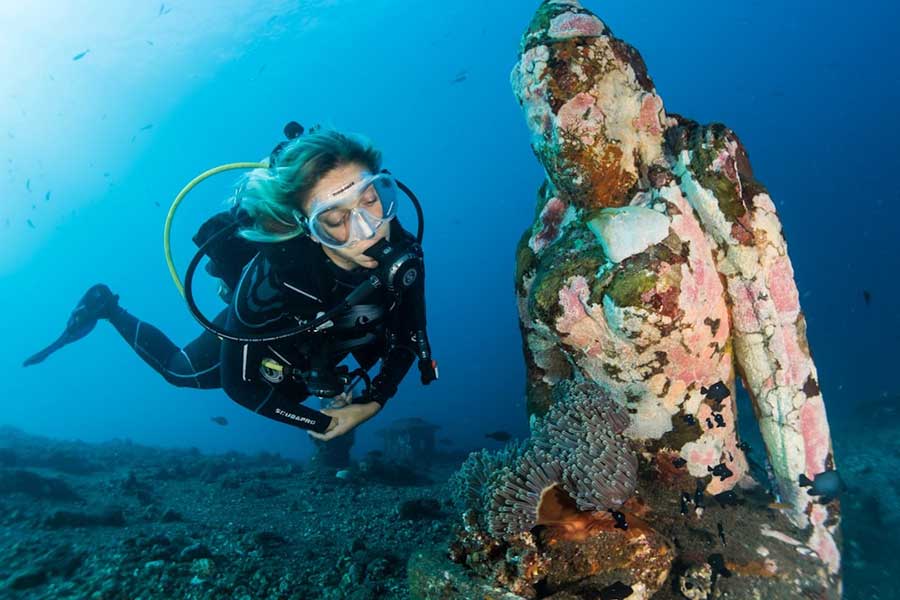
Nusa Penida Advanced Open Water: What Comes After Open Water?
After completing their PADI Open Water certification, many divers start to wonder, “What’s the next step?” One of the best options is to take the Nusa Penida Advanced Open Water course.
Nusa Penida offers challenging currents, varying depths, and excellent visibility. Not only that, but the island also provides a more immersive diving learning experience than other locations. This article will discuss what you’ll learn, the duration of the training, the dive sites used, and the certification levels you can pursue afterward.
Why Nusa Penida Is the Ideal Spot for Advanced Open Water
The reasons why many instructors recommend Nusa Penida as a training location for Advanced Open Water:
The currents are real. Many dive sites in Nusa Penida are suitable for beginners. The surrounding sea conditions are calm, with currents that are a daily part of diving and ideal for drift diving practice.
Wide range of depths. The variation in depth—from shallow reefs to deeper spots—requires you to understand depth management. Moreover, visibility during certain seasons can reach tens of meters, making deep dives under these conditions much more reassuring.
Realistic buoyancy training. Buoyancy control is practiced in conditions that aren’t always ideal. There will be surges, currents, or changing topography. As a result, divers who complete the Advanced Open Water course typically emerge with greater confidence than those who train at different locations.
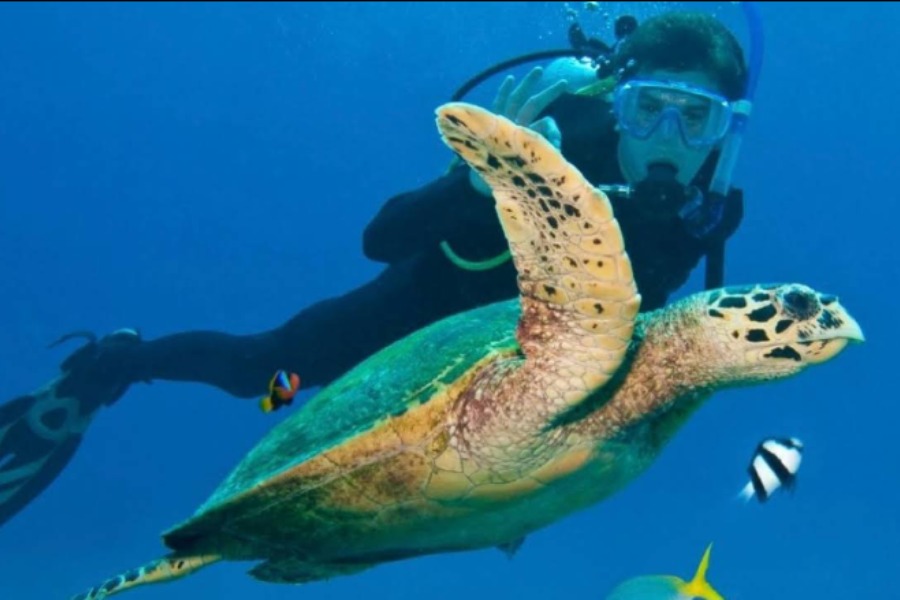
What You’ll Learn in the Nusa Penida Advanced Open Water Program
5 Required Adventure Dives
The PADI Advanced Open Water program consists of five types of Adventure Dives. Two of them are required, while the remaining three can be chosen based on your interests:
- Deep Dive (required) — takes you to depths beyond the Open Water limit (up to 30 meters), while teaching you about the effects of nitrogen narcosis and how to manage air at higher pressures.
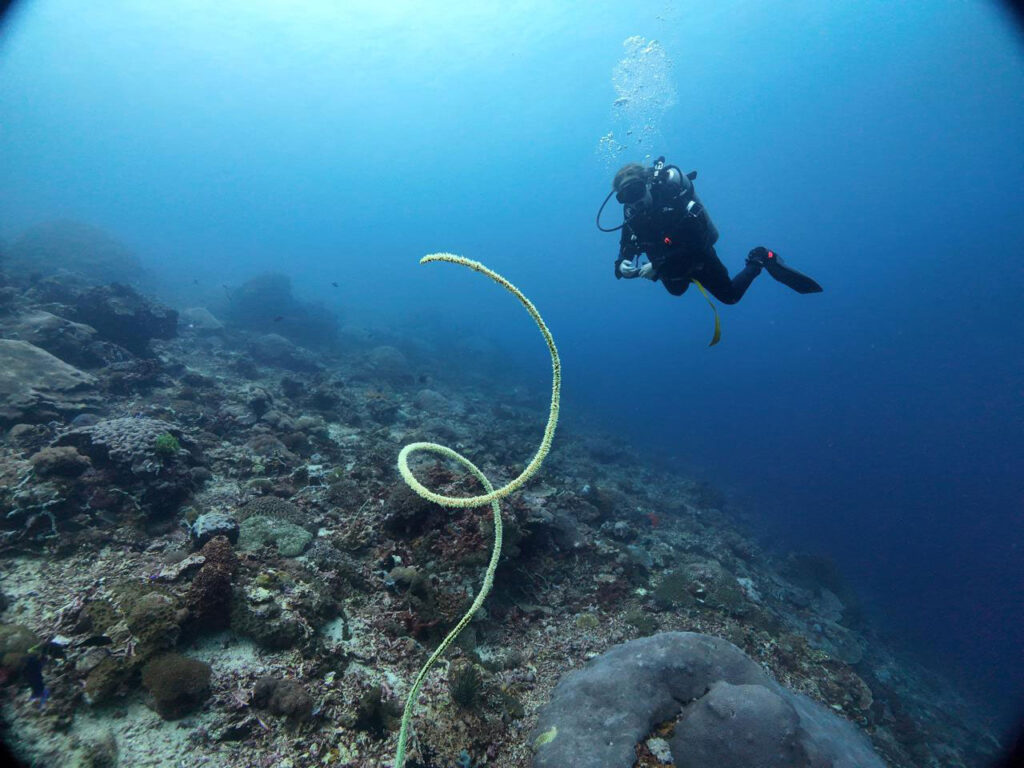
- Underwater Navigation (required) — trains divers to read a compass and natural underwater landmarks to find their way back without constantly relying on a guide.
- Three elective Adventure Dives — chosen freely from a list such as Peak Performance Buoyancy, Drift Dive, Underwater Photography, or Fish Identification/Naturalist, depending on your interests and goals (discussed in more detail in the next section).
Program Duration
Generally, there are two schedule options that can be tailored to your vacation time:
- 2 days (standard) — five dive sessions condensed into two or three dives per day, ideal for those with limited time.
- 3 days (relaxed) — the schedule is spread out so you don’t have to do three dives in a single day. This duration allows more time for rest, or even for squeezing in an extra fun dive between course sessions.
No Need to Be an Experienced Diver
A common misconception is that the Advanced Open Water course is only for divers with extensive experience. In fact, once you’ve passed the Open Water course, you’re immediately eligible to take this program. So, there’s no minimum number of dives you need to have logged beforehand. In fact, many divers take it shortly after their first certification, while the momentum of learning is still fresh.
Read More:
- Best Snorkeling Spots Nusa Penida: Full Guide (2026)
- Gamat Bay Diving Nusa Penida: The Calm, Easy Dive Site
The Most Popular Adventure Dives in Nusa Penida
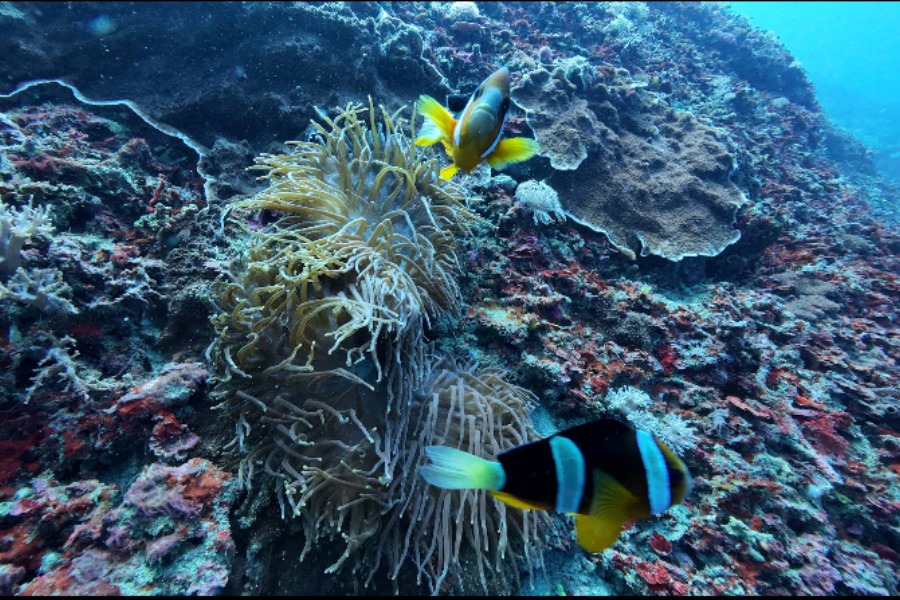
Peak Performance Buoyancy
For divers with limited experience, Peak Performance Buoyancy is recommended as the first choice. This session focuses more on improving body position in the water, reducing air consumption, and learning how to float with greater precision.
Drift Dive
This offers the adventure dive that best captures the unique character of Nusa Penida. Currents here are indeed a part of the daily diving experience—especially when learning drift diving in Nusa Penida firsthand. Divers will learn about:
- How to read the direction and strength of currents before entering the water
- When it’s best to go with the current rather than against it
- How to stay calm and maintain your buddy’s position when conditions change mid-dive
- Short hovering techniques to observe subjects without being swept too far away
Underwater Photography
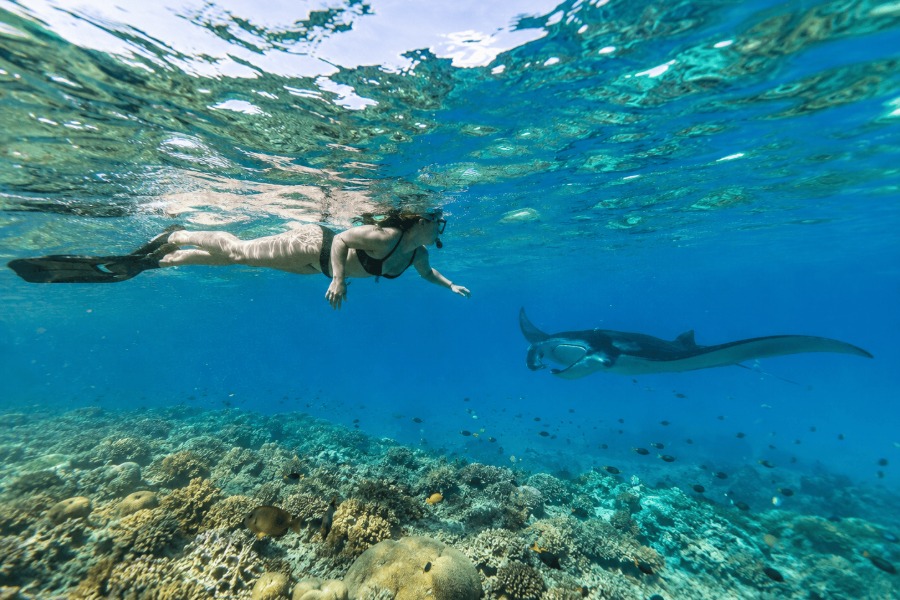
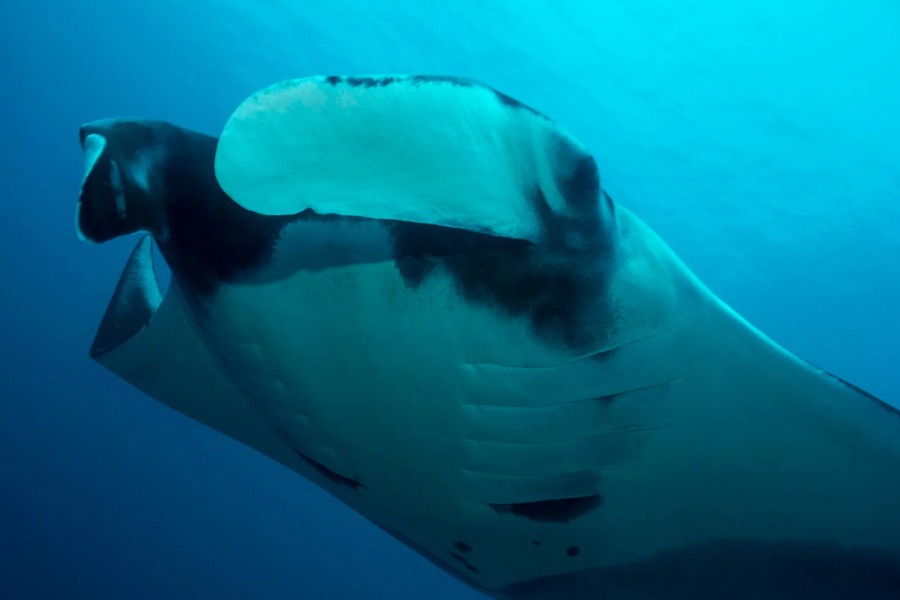
A favorite reason is the underwater photography opportunities. Nusa Penida offers sightings of manta rays, healthy coral reefs, and a diverse array of macro life.
Nusa Penida always provides plenty of perfect moments to capture. This dive teaches the basics of underwater camera settings and trains divers on how to maintain a safe distance from marine life while taking photos.
Fish Identification / Naturalist
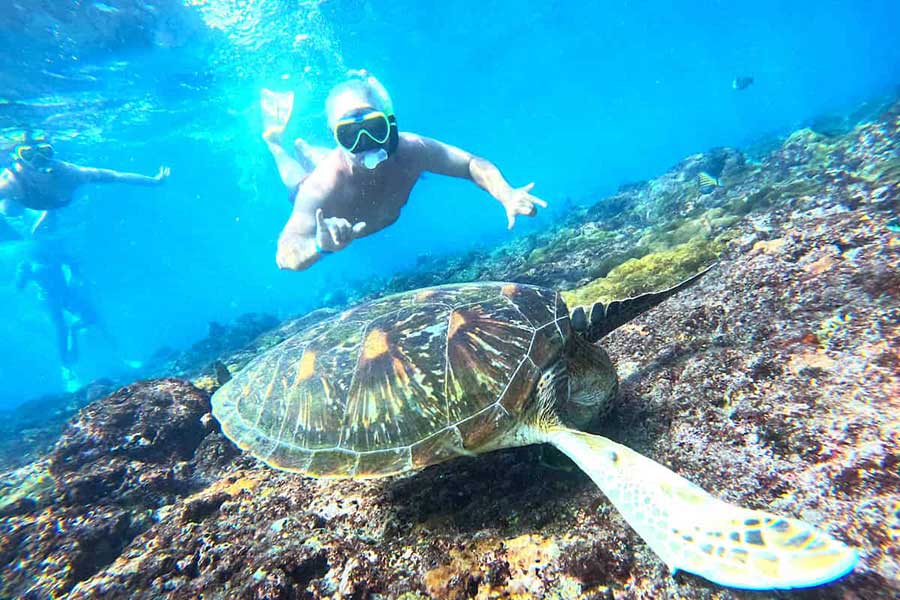
This experience is perfect for divers who want to broaden their understanding of the biodiversity in Nusa Penida’s marine conservation area—from hundreds of species of reef fish to the ecosystem interactions that support them. Divers who take this course usually return with a new perspective on every subsequent dive.
Beyond Advanced: Rescue Diver and Divemaster
For those who feel that the Advanced Open Water course is just the beginning, the next two levels await.
The Rescue Diver course teaches stress management in the water, emergency response, and self-rescue and buddy-rescue techniques. This program is often described as a turning point that changes the way a person dives. Some core skills covered include:
- Recognizing and preventing signs of stress in yourself and your buddy
- Emergency response both on the surface and underwater
- Self-rescue techniques when facing equipment issues or fatigue
- Buddy-rescue simulations covering various scenarios, including evacuation to a boat
- The often-choppy sea conditions off Nusa Penida make it a relevant training ground for the skills listed above.
On the other hand, Divemaster is the first professional level in the PADI system. Taking the Divemaster course in Nusa Penida unlocks several new capabilities:
- Leading fun dives for certified divers
- Assisting instructors during course sessions, ranging from Discover Scuba to Open Water
- Honing your ability to handle emergency situations as a group leader, rather than just a participant
- Paving the way to work as a professional dive guide
The process usually involves staying on the island longer—something many participants actually enjoy, as they get extra time to log dive hours while becoming more familiar with the characteristics of each dive site around the island.
Nusa Penida Dive Sites Suitable for Advanced Divers
These sites are better suited for you once you’ve earned your Advanced certification.
- Blue Corner — the currents can change quite quickly, so your drift diving skills will truly be put to the test here.
- Ceningan Wall — a coral wall with significant depth, suitable for divers who are already comfortable with deep dives.
- Batu Bolong — topography that’s more challenging for navigation, the perfect place to practice the underwater navigation skills you’ve just learned.
None of these three locations are recommended for first-time divers. However, if you’ve completed the Advanced program, these sites will actually become the most memorable part of your diving trip in Nusa Penida.
Continue Your Nusa Penida Advanced Open Water Course with Nusablu
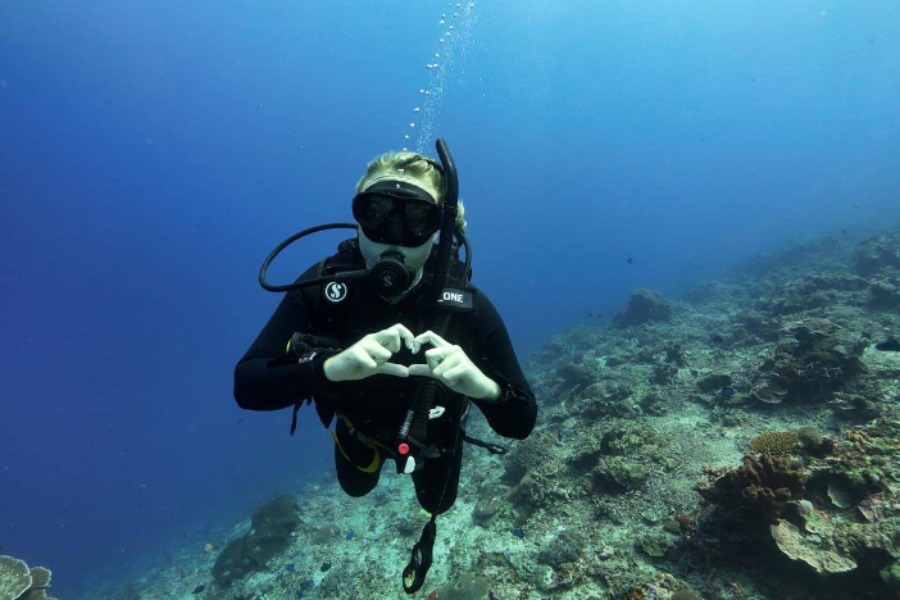
What makes the diving learning process more convenient is that you don’t have to travel back and forth between your accommodation and the dive center. Here are some benefits of taking this course with Nusablu:
- The resort and dive center are located in the same place, so you don’t have to catch an early morning boat from elsewhere.
- You’ll be guided directly by professional PADI instructors who understand the characteristics of every dive site around the island.
- Flexible schedule—you can choose between a more intensive two-day option or a more relaxed three-day option.
- Ease of adding extra fun dives since you’re staying in the same location as the instructors.
If you’re ready to continue your certification, visit our Advanced Open Water Course page to view the schedule and program details, or explore our wider range of Nusa Penida dive packages.
Conclusion
Taking the Nusa Penida Advanced Open Water course is more than just adding another certification to your logbook. It’s a concrete step toward becoming a more confident diver, better at reading ocean conditions, and better prepared to explore dive sites that may have felt “out of reach” while you were still an Open Water diver.
Nusa Penida isn’t just a place to spot manta rays from a distance. For divers serious about improving their skills, this island is a real-world training ground—a place where currents, depths, and marine biodiversity teach you far more than simply following modules in a calm pool.
If you’re ready to take the next step, visit the Nusablu Advanced Open Water Course page and start planning your schedule with our PADI instructors in Nusa Penida.
Frequently Asked Questions (FAQ)
What’s the difference between Open Water and Advanced Open Water diving in Nusa Penida?
The Open Water program limits dives to a depth of about 18 meters and focuses on basic survival skills in the water. Meanwhile, Advanced Open Water extends the depth limit to 30 meters and introduces you to five different types of diving experiences—ranging from deep dives to underwater navigation.
Which Nusa Penida dive sites require Advanced certification?
Nusa Penida dive sites that feature strong currents or significant depths—such as Blue Corner, Ceningan Wall, and Batu Bolong—are suitable for divers with Advanced certification. Meanwhile, sites like Manta Point can be accessed by Open Water divers under certain conditions, provided they are accompanied by an instructor.
Can I go straight from Open Water to Advanced Open Water without a break?
Yes. There are no requirements regarding a minimum number of dives or a specific time gap between the two certifications. Many divers actually take the Advanced Open Water course shortly after completing Open Water while their basic skills and confidence are still fresh.
How long does it take to become a Divemaster in Nusa Penida?
The duration varies depending on the number of logged dives and the intensity of the program, but it generally requires a stay of several weeks to a month on the island. The process includes a combination of theory, field practice, and hands-on experience assisting instructors during courses and leading fun dives.
Is Nitrox diving available for advanced divers in Nusa Penida?
Yes, PADI Enriched Air (Nitrox) certification is generally available as an add-on program at many dive centers in Nusa Penida, including for divers who have just completed their Advanced Open Water course. Nitrox allows for slightly longer bottom time at certain depths, though it still requires a separate theoretical understanding before use.