Nusa Penida Snorkeling Guide: Manta Rays, Coral Reefs & Best Spots
Imagine slipping into crystal-clear waters and coming face to face with a giant manta ray gliding effortlessly just meters beneath you. This is what makes Nusa Penida snorkeling such an unforgettable experience. Just a short boat ride from Bali, Nusa Penida offers the chance to explore vibrant coral gardens, dramatic underwater landscapes, and some of the island’s most famous manta ray spots.
Whether you’re an experienced swimmer or trying snorkeling for the first time, knowing the best spots, when to visit, how to get there, and essential safety tips can help you make the most of your adventure.
Top Snorkeling Spots: Where to Find Mantas and Coral Gardens
Choosing the right location is the first step in any Nusa Penida snorkeling trip. The coastline holds several distinct marine environments, each with its own currents, depths, and resident species.
Manta Point: Swimming with Oceanic Giants
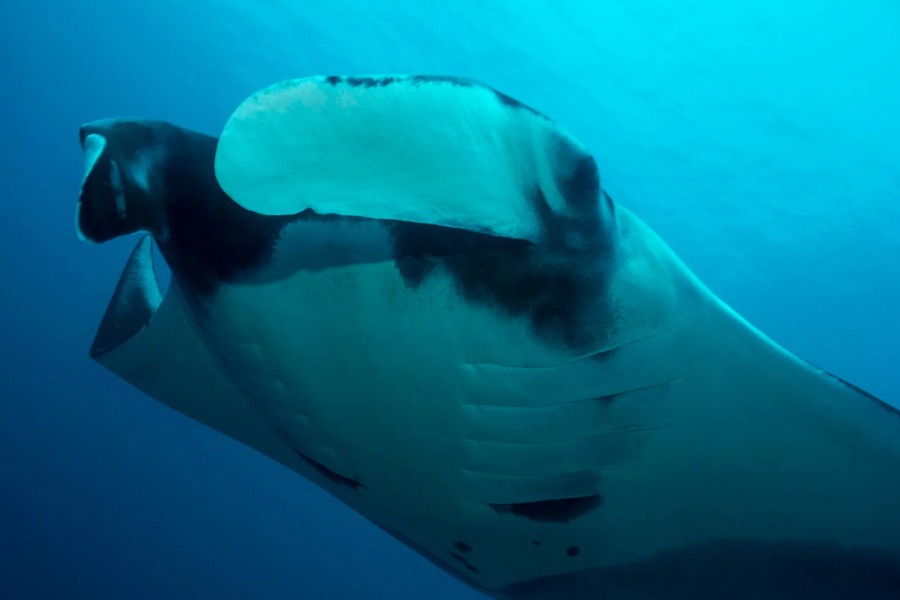
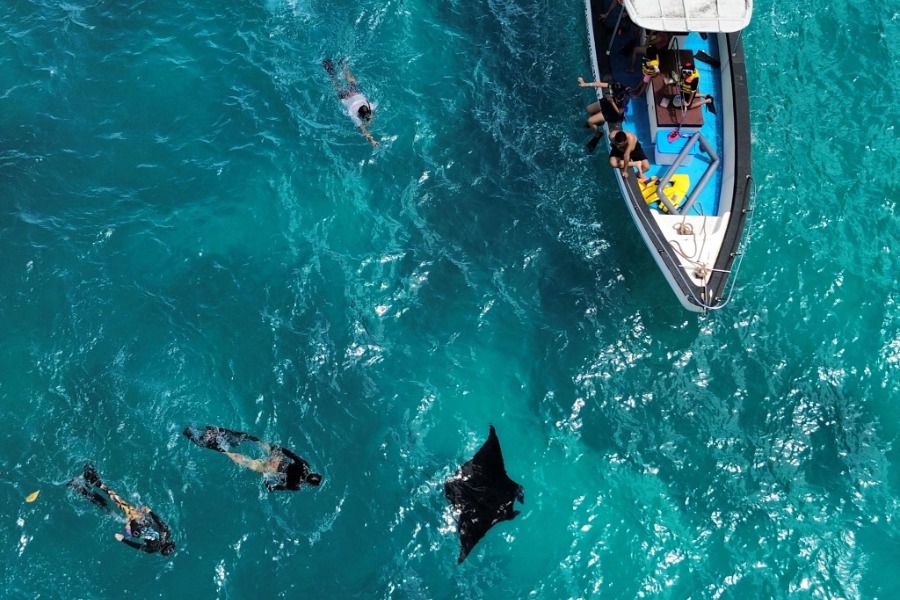
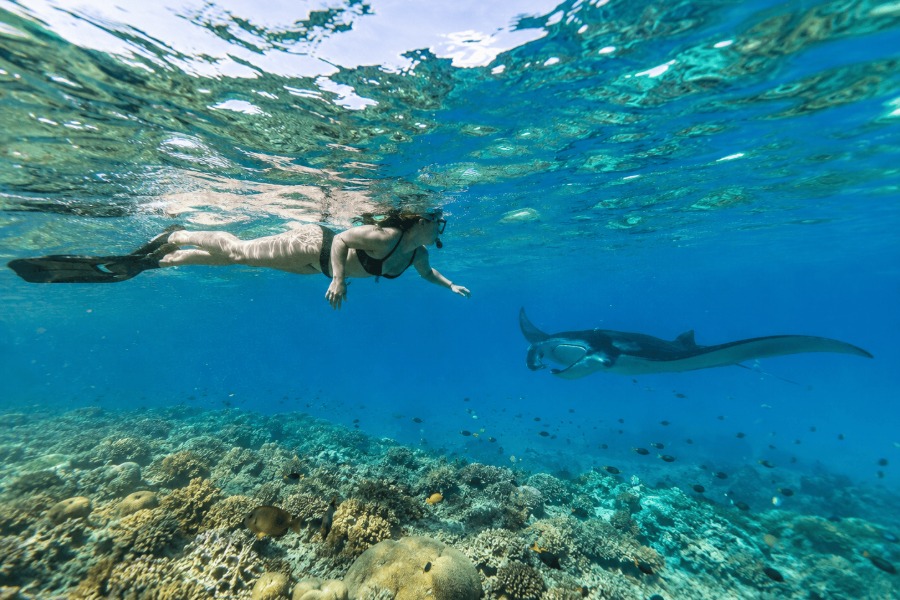
Along the rugged southern coast, Manta Point is a cleaning station for reef manta rays (Mobula alfredi), where the giants gather year-round to let cleaner wrasse pick parasites off their skin. Water here runs cooler — around 20–22°C — due to deep-sea upwellings, but the payoff is close encounters with animals that can span several meters wingtip to wingtip. Because the site faces the open Indian Ocean, Manta Point snorkeling depends heavily on calm surface conditions and is best suited to more confident swimmers.
Worth knowing: some operators also run trips to a separate site called Manta Bay, which is closer to shore and cheaper but more crowded, with less consistent sightings. Manta Point is the further, calmer, and generally more rewarding option — ask your operator which one is included in your package.
Read More Other Articles:
- Manta Point vs Manta Bay: Which One Should You Choose?
- Best Snorkeling Spots Nusa Penida: Full Guide (2026)
Crystal Bay: Sheltered Waters and Macro Life
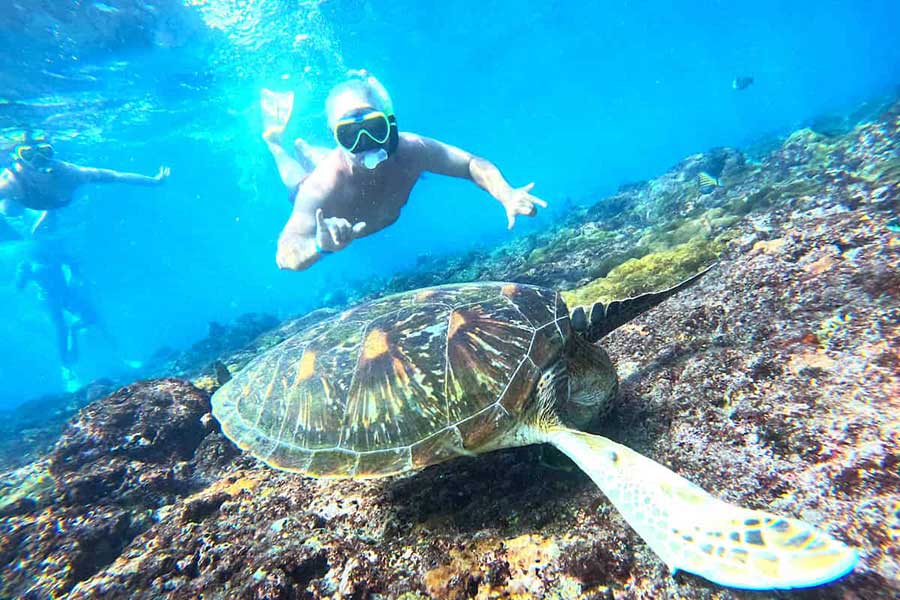
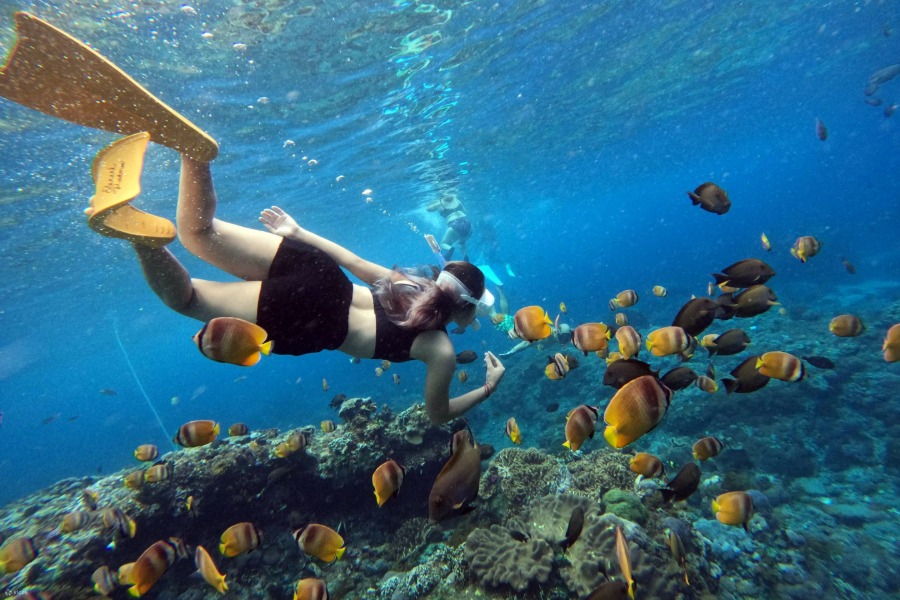
Tucked into a sheltered cove on the western shore, this spot is known for exceptional visibility, often exceeding 20 meters. A shallow, sandy entry opens into a coral garden of staghorn, table, and brain corals, and it’s one of the better spots to see green sea turtles resting on the reef or surfacing for air. Its protected layout makes it a good warm-up stop for swimmers of any level.
Gamat Bay: Coral Walls and Rich Biodiversity
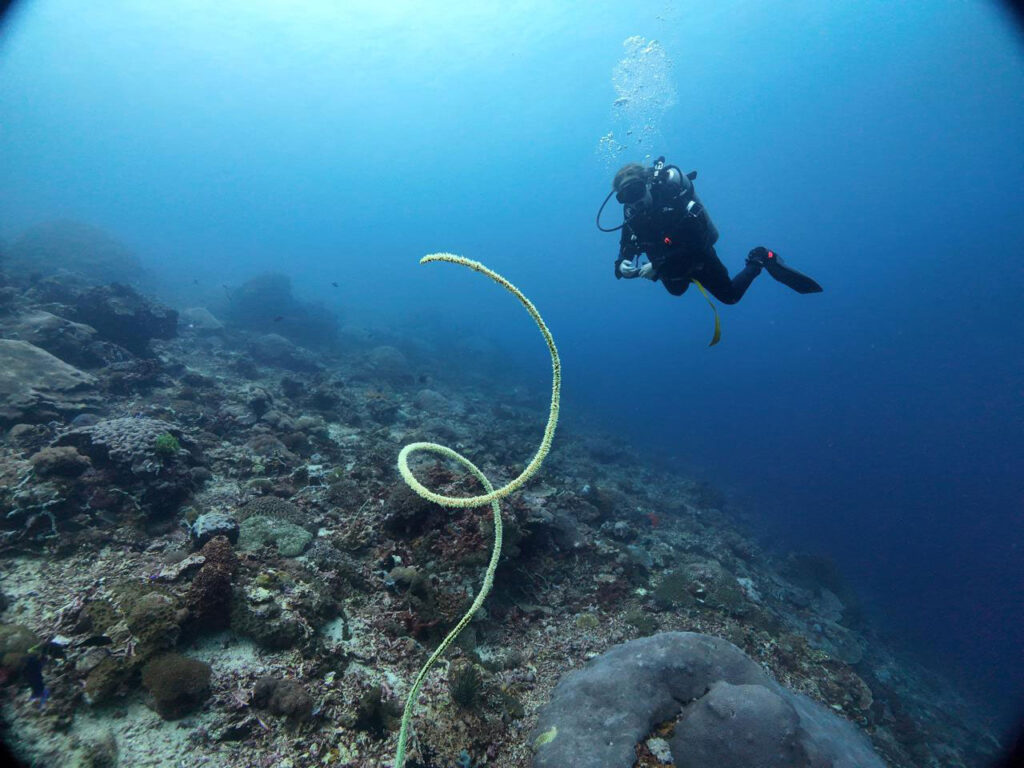
Gamat Bay offers a dramatic wall that drops into deeper water. Because the bay funnels nutrient-rich currents from the Lombok Strait, it supports a dense population of nudibranchs, clownfish, giant clams, and hawksbill turtles. Currents near the outer drop-off can strengthen quickly during tide changes, so careful navigation matters here.
Spot Comparison at a Glance
| Spot | Average Depth | Key Marine Species | Difficulty | Best Time of Day |
| Manta Point | 5–12 m | Reef manta rays, blue-spotted stingrays, nurse sharks | Moderate–Advanced (open ocean swell) | 7:30–10:00 AM |
| Crystal Bay | 2–8 m | Green sea turtles, butterflyfish, porcupinefish | Beginner–Intermediate | Late morning–early afternoon |
| Gamat Bay | 3–15 m (wall) | Hawksbill turtles, nudibranchs, reef fish | Intermediate–Advanced (stronger currents) | Slack tide (between high/low) |
Best Time to Go: Dry Season vs. Wet Season
Timing has a big effect on Nusa Penida snorkeling conditions. The island has two marine seasons, each with distinct underwater visibility and swell.
- Dry season (May–October): Trade winds, low humidity, and the clearest visibility of the year, often 25+ meters. It’s also the best window for spotting the elusive Mola mola (ocean sunfish) in deeper water. The trade-off: stronger southeasterly winds can push up larger swells at southern sites like Manta Point.
- Wet season (November–April): Rain showers, warmer water (around 28°C), and generally smaller open-ocean swells. Manta rays stay at their cleaning stations year-round, so wildlife encounters remain consistent even outside the dry months.
Getting There & Booking a Boat
How to Get There from Sanur Port
Your journey starts at Sanur Harbor on mainland Bali. Fast boats depart daily between 7:30 and 9:00 AM, crossing the Badung Strait in 30–40 minutes to ports like Toyapakeh, Buyuk, or Sampalan. To make the most of your time in the water, book a private or small-group Nusa Penida boat tour directly from the harbor rather than joining a large mixed group.
Safety Guidelines & Gear
Safety comes first with Nusa Penida snorkeling — respecting the ocean here isn’t optional, since currents and swell can change quickly.
- Wear a life jacket. Even strong swimmers can tire fast in surge and shifting currents.
- Check guide ratios. Choose licensed operators that keep roughly 1 guide per 4–5 snorkelers.
- Use reef-safe sunscreen. Mineral-based options with zinc oxide or titanium dioxide protect coral polyps.
- Keep your distance from wildlife. Stay at least 3 meters from manta rays and turtles — never touch, chase, or feed them.
Essential Packing List
Packing right matters for any Nusa Penida day trip, since you’ll be moving between open boats, rocky shorelines, and the water itself.
- Dry bag (10–15L) — protects electronics and clothing from spray on open speedboats.
- Reef shoes or sturdy sandals — for rocky shorelines and boat ladders.
- Your own snorkel mask — a well-fitted silicone mask prevents fogging and leaks, even if gear is provided.
- Hydration and electrolytes — tropical sun plus active swimming dehydrates you fast.
- A long-sleeve rashguard — UPF sun protection without sunscreen runoff into the reef.
Plan Your Trip with a Trusted Nusa Penida Local Operator
Whether you want to drift above vibrant reef gardens or swim alongside ocean giants, having an experienced crew makes the difference. Nusablu specializes in Nusa Penida snorkeling and scuba diving tours, with certified guides, quality gear, and itineraries built around your skill level — including the popular snorkeling Nusa Penida package.
Ready to make a splash? Contact Nusablu today to reserve your Nusa Penida snorkeling or diving trip.
Frequently Asked Questions
Is Nusa Penida snorkeling worth it for beginners?
Yes — most operators provide life jackets, flotation aids, and certified guides who stay in the water with less confident swimmers, which is what makes sites like Crystal Bay approachable even for first-timers. The key is picking a sheltered spot and going with a guide rather than attempting open-water sites solo.
Can I get to Nusa Penida from somewhere other than Sanur?
Sanur is the main harbor for reaching Nusa Penida, though Padang Bai offers another crossing option. Sanur remains the faster, more frequent route for day-trippers, which is why most snorkeling tours depart from there.
How many days should I spend on Nusa Penida?
Most snorkeling spots can be covered in a single day trip from Bali, but travelers who want to explore more thoroughly, without the tighter timing of a day tour, are often advised to stay two to three days on the island itself.
What’s the difference between Manta Point and Manta Bay?
They’re two separate sites. Manta Bay sits closer to shore and is where most standard tours go, so it tends to be busier with less consistent sightings, while Manta Point involves a longer boat ride but generally offers calmer viewing conditions and fewer crowds.
Is snorkeling in Nusa Penida safe?
It can be, provided you go with a licensed operator, wear a life jacket, and stay close to your guide — conditions like current strength and swell change quickly and vary a lot by site, so the “safe” answer depends heavily on which spot and season you’re snorkeling in.