Manta Point Nusa Penida Diving Guide for an Unforgettable Marine Encounter
Manta Point is one of Bali’s most famous diving destinations for travelers who want to observe manta rays in their natural habitat. With dramatic ocean scenery and opportunities to encounter fascinating marine life, Manta Point Nusa Penida diving offers an unforgettable experience for divers who value both underwater exploration and marine conservation.
However, diving at Manta Point involves more than simply entering the water and looking for manta rays. Waves, currents, visibility, and changing ocean conditions can influence every trip. Therefore, understanding the dive site, preparing the right equipment, and choosing a professional operator are essential steps before your adventure.
This guide explains what makes Manta Point special, when to visit, how diving compares with snorkeling, and what to consider before booking your underwater experience in Nusa Penida.
Understanding Manta Point in Nusa Penida
Manta Point is located off the southern coast of Nusa Penida, where the island meets the Indian Ocean. The site is particularly well known for manta ray encounters, making it an appealing destination for divers visiting Bali.
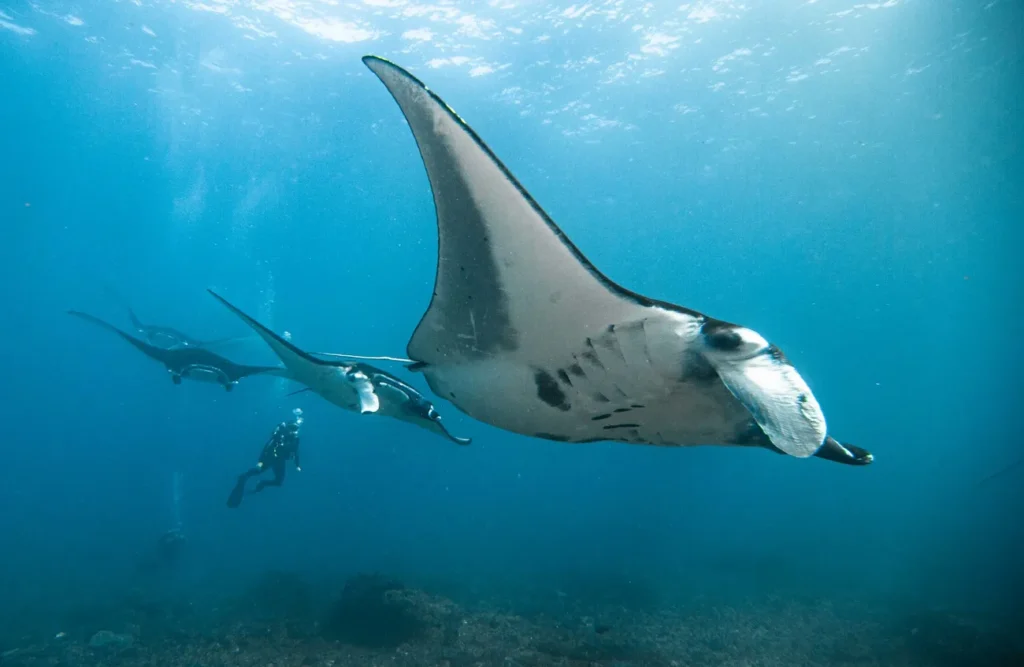
Manta rays are large marine animals that glide through the water using their broad pectoral fins. They are filter feeders that consume tiny organisms, including zooplankton. Depending on local conditions, manta rays may visit areas where smaller fish help clean their bodies.
These natural behaviors make Manta Point interesting for underwater enthusiasts and wildlife photographers. Nevertheless, manta rays are wild animals, so their presence cannot be predicted with certainty.
The surrounding ocean also requires careful consideration. Waves, currents, and underwater conditions can change throughout the day. For this reason, a professional assessment is essential before entering the water.
Why Choose Manta Point Nusa Penida Diving?
Observe Manta Rays in Their Natural Habitat
The main attraction of Manta Point Nusa Penida diving is the opportunity to observe manta rays moving freely through their natural environment. Depending on their activity, divers may see them gliding across the reef or visiting areas associated with feeding and cleaning behavior.
Unlike an aquarium experience, wildlife encounters in the ocean are unpredictable. Some trips offer memorable sightings, while others may not include any manta ray encounters.
To improve the quality of the experience, divers should remain calm and follow their guide’s instructions. Avoid touching, chasing, or blocking the animals. Instead, maintain an appropriate distance and allow the manta rays to choose their own movements.
This respectful approach supports animal welfare while helping divers enjoy the encounter without disturbing the surrounding marine environment.
Explore an Interesting Marine Ecosystem
Manta Point offers more than an opportunity to photograph large marine animals. It also provides a chance to learn about the connections between marine species and their habitats.
Manta rays depend on suitable feeding grounds and healthy ocean ecosystems. Their movements can be influenced by food availability, water conditions, and other environmental factors.
During your dive, pay attention to the surrounding marine life rather than focusing exclusively on manta rays. Observing the underwater environment can make the experience more rewarding, even when wildlife sightings are limited.
Responsible diving also encourages visitors to understand why coral reefs, marine habitats, and ocean biodiversity deserve protection.
Enjoy a Memorable Underwater Adventure
For certified divers, Manta Point can provide an exciting addition to a Bali diving itinerary. The combination of open-ocean scenery, marine wildlife, and changing underwater conditions creates an experience that differs from many sheltered reef dives.
However, an enjoyable adventure should never come at the expense of safety. Choose a dive plan that matches your certification, experience, and comfort level.
A suitable operator will explain the expected conditions, establish a clear dive plan, and adjust the activity when necessary.
Is Manta Point Suitable for Beginner Divers?
Manta Point is not automatically suitable for every diver. Although some sections may be relatively shallow, waves and currents can make the site challenging.
Diving at Manta Point for Beginners
If you are a beginner, discuss your certification and recent diving experience with the operator before making a reservation. The instructor can assess whether the planned activity is appropriate for your abilities and the prevailing conditions.
Importantly, shallow water does not necessarily mean an easy dive. Buoyancy control, comfort underwater, air management, and the ability to follow instructions are all important considerations.
If the conditions are unsuitable, consider a more sheltered dive site or postpone your activity. A responsible operator should explain these alternatives clearly.
Diving at Manta Point for Experienced Divers
Experienced divers may feel more comfortable exploring sites with changing currents. Nevertheless, previous experience does not eliminate the risks associated with open-ocean diving.
Before entering the water, review the dive plan with your guide. Discuss maximum depth, expected bottom time, air-management limits, group procedures, and the response plan if divers become separated.
You should also understand the entry and exit arrangements, particularly when waves or currents affect the boat and surrounding water.
Ultimately, the decision to dive should reflect both your abilities and the actual conditions on the day.
When Is the Best Time to Visit Manta Point?
Manta rays can be encountered around Nusa Penida throughout the year. However, sightings depend on natural movements, food availability, and environmental conditions. No particular date or season can guarantee an encounter.
Weather is another important consideration. Sunny skies do not necessarily indicate calm water, and underwater visibility can change even when surface conditions appear favorable.
Before booking, ask your operator about the latest sea conditions and planned departure arrangements. Choose a provider that communicates clearly about possible delays, alternative locations, and cancellations.
Flexibility is particularly useful when planning an ocean activity in Bali. Allow enough time in your itinerary to accommodate changes rather than treating a manta ray encounter as a guaranteed event.
Manta Point Diving vs Snorkeling
Both diving and snorkeling can provide opportunities to observe marine life around Nusa Penida. However, the activities differ in equipment, training requirements, and the way participants experience the underwater environment.
Scuba Diving
Scuba diving allows participants to explore underwater using breathing equipment. Divers need appropriate training, suitable equipment, and the ability to follow established diving procedures.
This option may appeal to certified divers who want to explore below the surface and observe marine life from a different perspective.
However, the required experience level depends on the dive plan and current conditions. Always confirm the operator’s requirements before booking.
Snorkeling
Snorkeling is generally performed at the surface using a mask and snorkel. It does not require scuba equipment, but participants still need appropriate supervision, suitable flotation equipment where necessary, and sufficient comfort in the water.
Conditions around Manta Point can be demanding for snorkelers as well as divers. Strong currents and waves can create risks, particularly for inexperienced swimmers.
Therefore, snorkeling should not automatically be considered safe simply because participants remain near the surface. Follow the guide’s instructions and stay out of the water whenever conditions are unsuitable.
How to Prepare for Manta Point Nusa Penida Diving
Good preparation helps you enjoy your trip while reducing avoidable risks. Before departure, confirm the operator’s requirements and make sure you understand what the package includes.
Use the following checklist to prepare for your dive.
- Check your certification: Confirm that your certification and recent experience meet the operator’s requirements.
- Discuss your health: Disclose relevant medical conditions and avoid diving when you are unwell. Seek professional medical advice when needed.
- Inspect your equipment: Check your mask, regulator, buoyancy control device, weights, and other required safety equipment.
- Attend the briefing: Listen carefully to instructions about currents, depth, entry and exit procedures, and emergency responses.
- Prepare personal essentials: Bring drinking water, a change of clothes, and appropriate sun protection.
- Confirm the itinerary: Check departure times, boat transfers, activity duration, and cancellation policies.
- Plan for seasickness: If you are prone to motion sickness, ask a healthcare professional or pharmacist about suitable options and possible side effects.
Do not use medication without understanding whether it could affect alertness or diving safety. When in doubt, consult a qualified medical professional familiar with diving-related health considerations.
Responsible Manta Ray Encounters and Marine Conservation
Responsible wildlife interactions help protect manta rays and preserve the quality of the diving environment.
During your dive, maintain an appropriate distance and avoid touching the animals. Never chase manta rays, block their swimming paths, or attempt to force them closer for photographs.
Instead, remain calm and follow your guide’s positioning instructions. Allow the animals to approach or move away naturally.
Photography also requires awareness. Keep your camera equipment under control, avoid contact with coral, and ensure that taking pictures does not distract you from your depth, air supply, or position within the group.
A responsible diving operator should explain wildlife interaction guidelines before the activity begins. If the guide instructs the group to move away or leave the area, follow those instructions immediately.
By choosing responsible practices, visitors can help support marine conservation while enjoying a meaningful encounter with Bali’s underwater wildlife.
How to Choose the Best Diving Operator in Nusa Penida
Choosing the right operator is an important part of planning Manta Point Nusa Penida diving. A professional team should prioritize safety, communicate clearly, and provide realistic information about the experience.
Start by checking the qualifications of the instructors and guides. Ask how group sizes are managed and whether the planned activity matches your certification and experience.
Next, review the equipment and safety procedures. Find out how equipment checks are performed, how the team responds to changing sea conditions, and what emergency arrangements are available.
You should also confirm the practical details before booking, including:
- Boat transfers and departure arrangements.
- Equipment rental and other inclusions.
- Expected activity duration and dive planning.
- Participant requirements and health considerations.
- Cancellation, rescheduling, and weather policies.
- Any additional charges that may apply.
Finally, compare operators based on the quality and transparency of their services rather than price alone. Be cautious of providers that promise guaranteed manta ray sightings or encourage diving when conditions are unsuitable.
A trustworthy operator will explain the limitations of wildlife encounters and make safety the priority throughout the trip.
Plan Your Manta Point Nusa Penida Diving Adventure
Manta Point is a memorable destination for travelers interested in marine wildlife and underwater exploration. Its reputation for manta ray encounters makes it an appealing addition to a Bali diving itinerary, particularly for visitors who appreciate nature and responsible tourism.
The best experience begins with realistic expectations, suitable preparation, and a dive plan that matches your abilities. Check the conditions, listen to your guide, and respect the animals and their environment.
When you plan Manta Point Nusa Penida diving with safety and conservation in mind, you can enjoy the adventure while helping protect the marine ecosystem that makes this destination special.
Frequently Asked Questions
Does Manta Point Nusa Penida diving guarantee manta ray sightings?
No. Manta rays are wild animals, and their presence depends on natural movements, food availability, and environmental conditions. A responsible operator will explain that sightings cannot be guaranteed.
Is Manta Point suitable for beginner divers?
Suitability depends on your certification, experience, and the conditions on the day. Beginners should discuss their abilities with the operator and choose a program appropriate for their level.
What is the difference between Manta Point and Crystal Bay?
Manta Point is particularly known for manta ray encounters, while Crystal Bay is known for its reef environment and seasonal opportunities to see mola-mola. Both sites can experience changing conditions, so divers should follow local safety advice.
Is snorkeling available at Manta Point?
Snorkeling may be offered when sea conditions and operator policies allow it. Participants should follow the guide’s instructions, use appropriate equipment, and avoid entering the water when conditions are unsafe.
What should I do if a manta ray approaches me?
Remain calm, follow your guide’s instructions, and avoid touching or chasing the animal. Maintain an appropriate distance and stay aware of your depth, surroundings, and fellow divers.