Crystal Bay Nusa Penida Diving: Everything You Need to Know
Among all the dive sites scattered across Nusa Penida, Crystal Bay offers a unique experience. This location isn’t just about easy access or high visitor numbers; it’s because no other spot offers such an impressive combination. In the waters of Crystal Bay, divers will find shallow reefs, crystal-clear water, and the chance to spot Mola Mola fish.
Crystal Bay Nusa Penida Diving offers a different experience depending on the season. This guide will cover diving at Crystal Bay in detail, from sea conditions to the marine life you might encounter.
Getting to Know Crystal Bay: More Than Just a Name
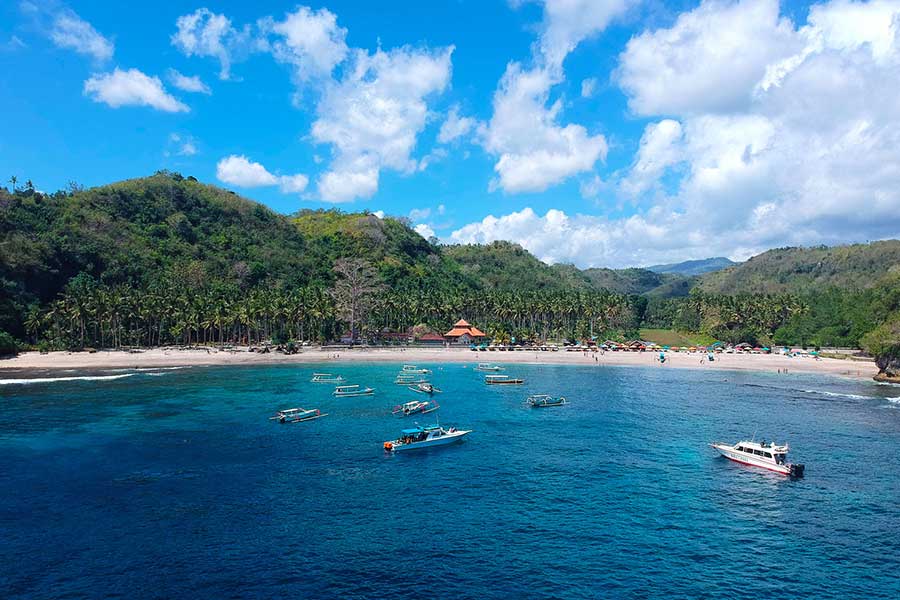
Crystal Bay Nusa Penida is located on the western side of the island, facing southern Bali. The bay is sheltered by headlands on both sides, creating a large, calm body of water compared to other open diving spots in Nusa Penida. This is why water visibility remains consistently between 15 and 30 meters.
The name “Crystal Bay” is more than just a marketing gimmick. Anyone diving in the morning will experience sunlight piercing the water’s surface, illuminating the coral colonies below. The water truly offers a surface as clear as crystal.
Access to Crystal Bay is possible from two directions. First, via land route by driving about 30 minutes from Toyapakeh Harbor and then entering the beach, or directly by boat from the harbor. For organized diving at Crystal Bay, Nusa Penida, nearly all dive centers—including Nusablu—use boat access to be more efficient and save time.
Dive Site Profile: Depth, Currents, and Underwater Structure
Before discussing what can be seen, it’s important to understand the physical characteristics of this spot, as diving at Crystal Bay offers different panoramas depending on the depth.
The shallow zone (1 to 15 meters) is the most beginner-friendly area. Here, divers can find expansive coral beds teeming with hundreds of species of tropical reef fish. Currents in this zone are relatively calm in the morning, making it suitable for both beginner divers and snorkelers. Visibility is excellent, and sunlight penetrates perfectly.
The deep zone (15 to 30 meters and deeper) has a distinct character. This is where the thermocline current begins to be felt. Water temperatures can drop drastically to 18–20 degrees Celsius, especially from July to October. Currents from the Indian Ocean rising through underwater channels on the western side of Nusa Penida create more technically challenging conditions. It is this current that brings the Mola Mola to the surface where divers can see it.
Marine Life in Crystal Bay
The richness of Nusa Penida marine life in Crystal Bay is divided into:
Shallow Zone
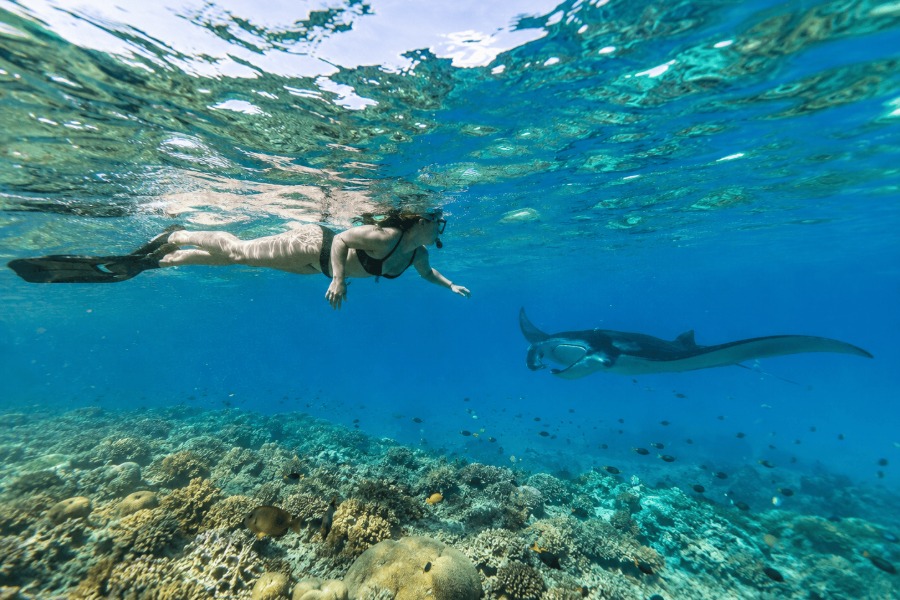
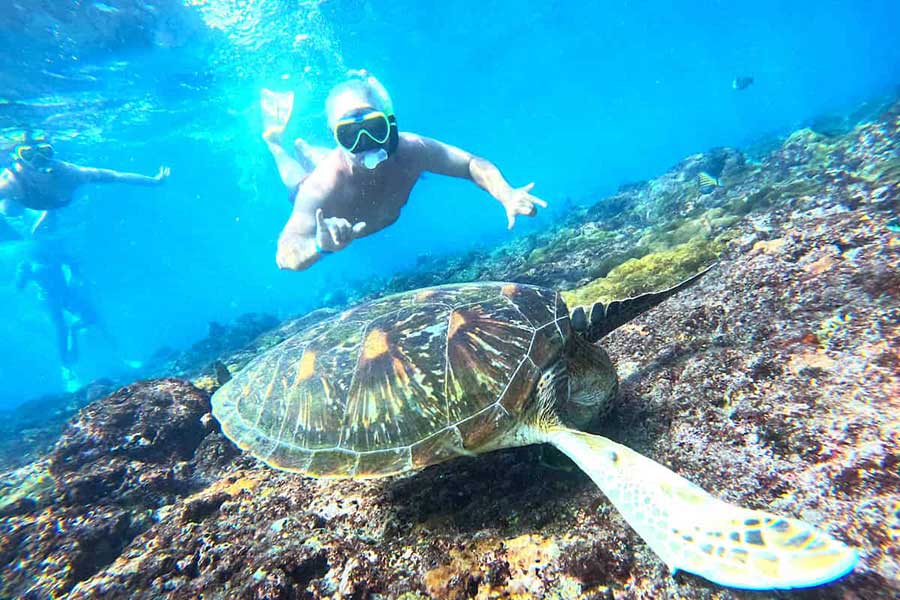
The coral reef area of Crystal Bay is one of the healthiest in Nusa Penida. Divers can find coral reefs, fan corals, and soft corals. Among these coral reefs, clownfish, parrotfish, moray eels, and schooling fish thrive in large numbers. Not only that, green sea turtles are also frequently spotted in this zone and are often found at depths of 5–10 meters.
Deep Zone
As you descend, the character of Crystal Bay in Nusa Penida changes. This zone features more limestone formations and dramatic drop-offs. Depths of 18 meters and below result in a sharp drop in water temperature with reduced visibility due to higher plankton content.
Mola Mola: The Most Iconic Resident
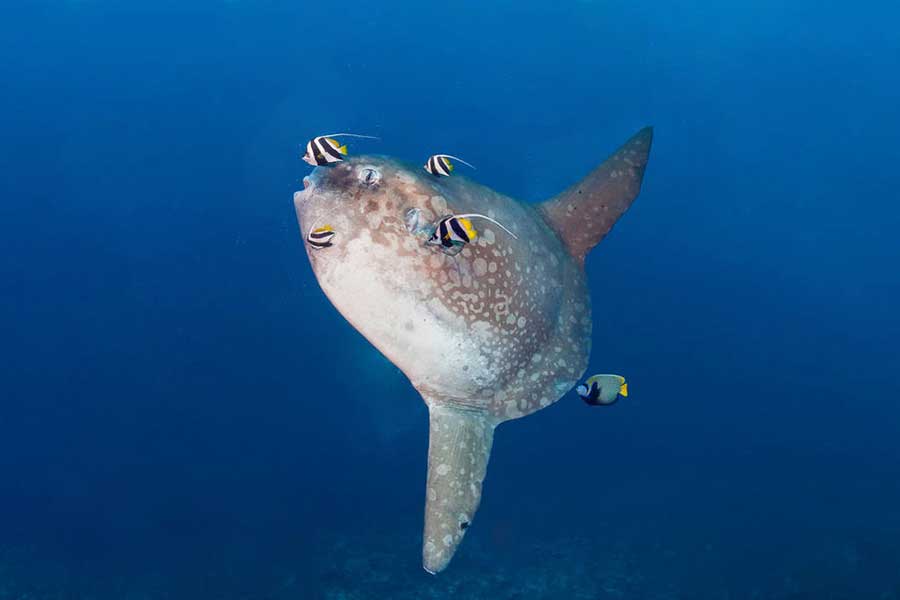
No discussion of Crystal Bay diving is complete without mentioning the Mola Mola. This giant fish is a strange yet amazing creature. It can weigh up to 2,300 kilograms and reach a body length of 3 meters.
Mola Mola in Crystal Bay typically feed on large quantities of jellyfish. The waters of Crystal Bay also serve as a cleaning station, where small fish remove parasites from their thick, rough skin.
The Mola Mola season in Crystal Bay runs from July to October, peaking in August and September. During this period, you’re likely to spot Mola Mola at depths of 18–30 meters, especially in the morning before 10:00 AM.
Note!
Mola Mola are sensitive to disturbances. If a diver makes sudden movements, uses a camera flash, or gets too close, it will cause them to descend back to deeper waters.
Nusablu enforces strict protocols when diving with mola mola.
- Maintain a minimum distance of 3 meters
- Do not use a camera flash
- Do not make aggressive leg movements
This discipline is part of conservation ethics and the only way to ensure a long and meaningful encounter.
Crystal Bay Diving vs. Snorkeling: Which Is Right for You?
One of the advantages of Crystal Bay in Nusa Penida over other spots on the island is its flexibility. This spot can be enjoyed from the surface or underwater, depending on your experience level and goals.
Snorkeling in Crystal Bay’s shallow zone can be done directly from the beach when sea conditions are calm. You can see coral reefs, sea turtles, and a variety of reef fish simply by snorkeling with a mask and snorkel. However, Mola Mola cannot be reached from the surface at all because its habitat lies at depths of 18 meters and below.
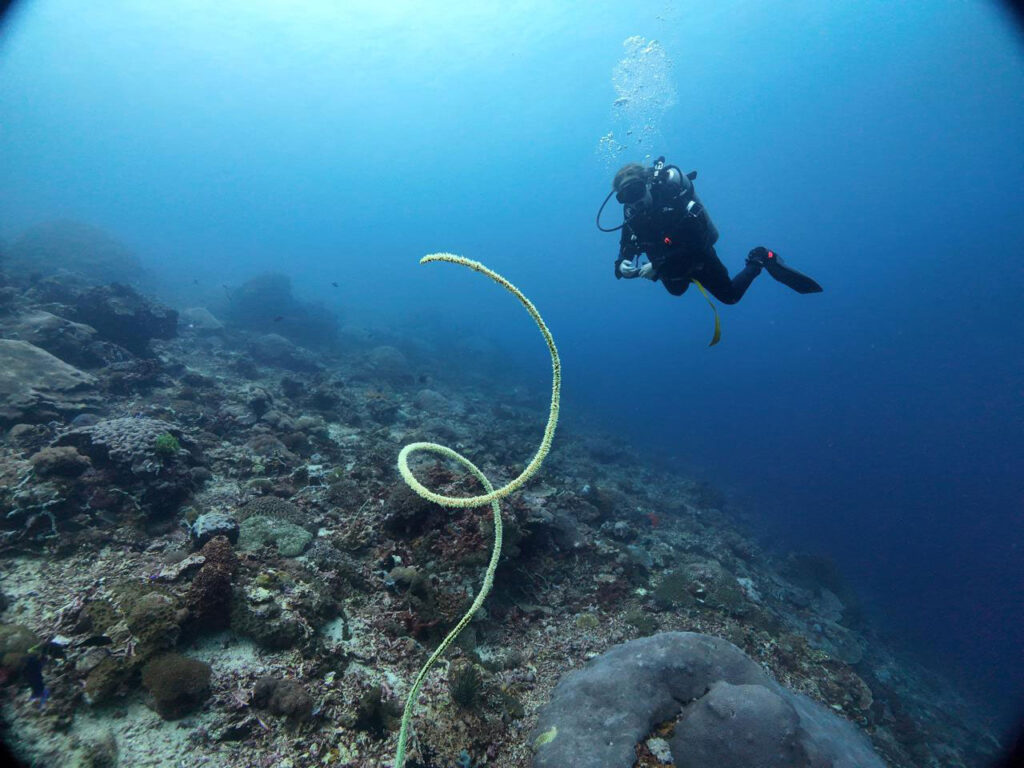
Scuba diving in Crystal Bay, Nusa Penida, grants access to the entire ecosystem. From colorful shallow reefs to the deeper zones where Mola Mola roam. If your goal is Crystal Bay Nusa Penida diving specifically to see Mola Mola, a PADI Open Water certification is the non-negotiable minimum requirement.
Difficulty Level and Certification Requirements
Crystal Bay Nusa Penida diving is suitable for divers of various levels, though with different caveats.
For the shallow zone up to 15 meters, divers must hold a PADI Open Water certification. This permission is granted provided the dive takes place in the morning when currents are not yet too strong. Conditions are relatively predictable and do not require special techniques.
For the deeper zone from 18 to 30 meters, especially during Mola Mola season, the recommended level is PADI Advanced Open Water or equivalent. Solid buoyancy control is essential, as divers must maintain their position in the water column amidst currents that do not always flow in a consistent direction.
For those without certification, Nusablu offers a Discover Scuba Diving (DSD) program limited to the shallow zone of Crystal Bay under full instructor supervision.
Why Dive at Crystal Bay with Nusablu
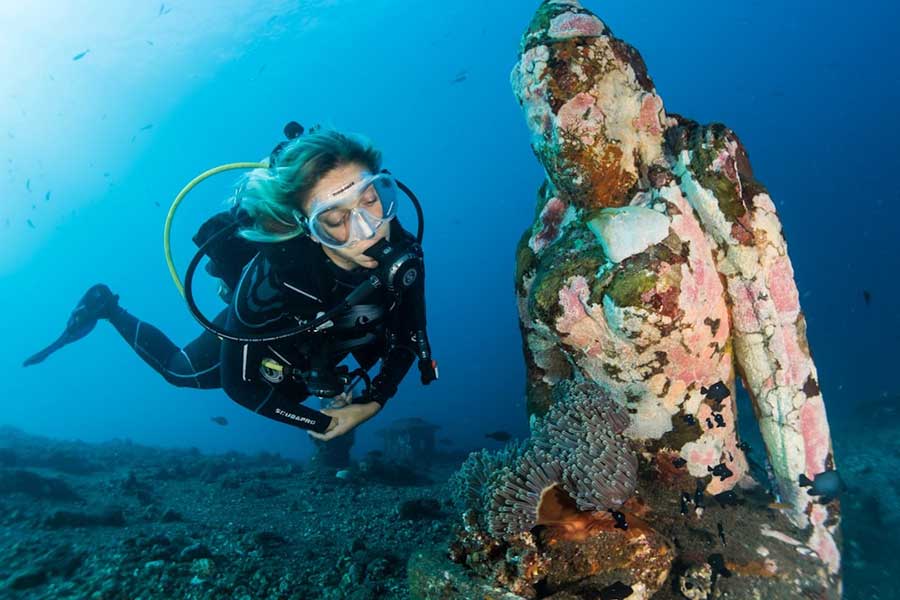
Among all Nusa Penida dive sites, Crystal Bay is the spot that most requires a dive guide. The currents are often unpredictable, there are two zones with vastly different conditions, and strict Mola Mola protocols apply.
Since Nusablu is located on Nusa Penida, our team dives in Crystal Bay almost every day. We understand seasonal current patterns, know where Mola Mola typically appear in specific months, and know when conditions are best for taking beginner divers versus experienced divers to different zones.
As an integrated resort, Nusablu guests also enjoy an added benefit: our boats depart from Toyapakeh earlier than day-trip operators from Bali. When diving in Crystal Bay, Nusa Penida, arriving early isn’t just a matter of convenience—it determines the quality of the entire experience.
FAQ
Is diving in Crystal Bay suitable for beginners?
Yes, with some conditions. The shallow zone of Crystal Bay, up to 15 meters, is ideal for PADI Open Water certified beginners. However, to descend to the deeper zone where the Mola Mola are found, at least an Advanced Open Water certification and solid buoyancy control are required.
When is the best time to see Mola Mola in Crystal Bay?
Mola Mola are most frequently spotted in Crystal Bay from July through October, peaking in August and September. The best time of day is in the morning before 10:00 AM.
What is the maximum dive depth in Crystal Bay?
Crystal Bay diving offers a wide range of depths. The shallow reef zone starts at 1 meter. The deeper zone can reach 30 meters or more at the drop-off. For the standard Crystal Bay Nusa Penida diving program with Nusablu, the maximum depth is typically limited to 25–30 meters, depending on the guest’s certification.
Can you snorkel in Crystal Bay without a boat?
Yes. You can snorkel in Crystal Bay directly from the beach when the sea is calm. You just need to bring your own mask and snorkel or rent them at a shop near the beach. However, to reach the best spots in the middle and deep zones, you’ll still need to use a boat.
Can Crystal Bay be combined with Manta Point in a single day?
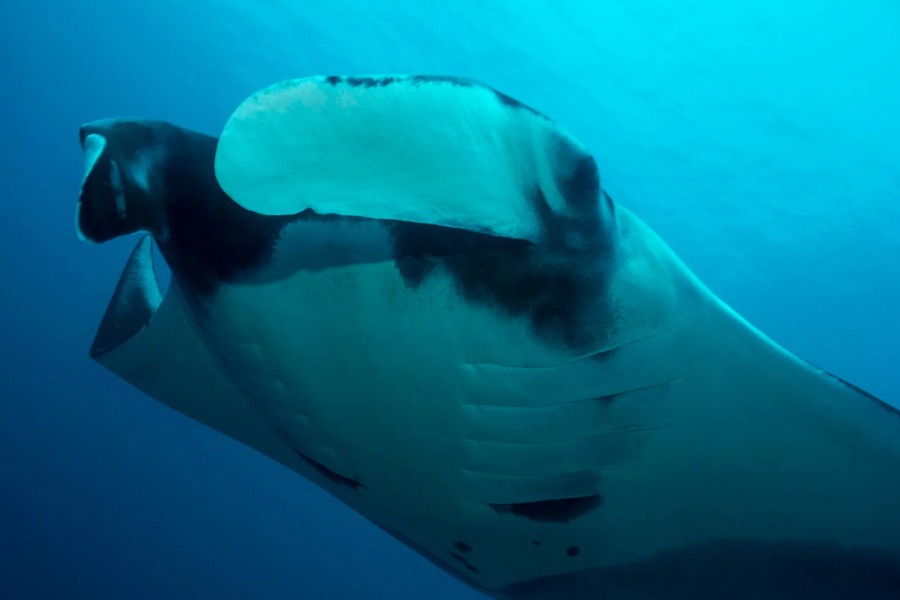
Yes, and this is the most popular three-dive program at Nusablu. It usually starts with a morning dive at Manta Point to see manta rays. Then, in the afternoon, we move to Crystal Bay Nusa Penida for the second or third dive. This combination offers two very different ecosystems in a single day.
Are the currents in Crystal Bay dangerous?
The currents in Crystal Bay can be very strong, especially in the deeper areas and during the day when sea conditions change. The Nusablu team monitors current conditions every morning and adjusts dive plans based on actual conditions, not a rigid schedule.
How much does diving in Crystal Bay with Nusablu cost?
Prices for fun dives in Crystal Bay with Nusablu are available as single dives or multi-dive packages. For the latest pricing and schedule availability, please contact the Nusablu team directly, as our prices vary depending on the season and the number of dives selected.