Mola Mola Nusa Penida: When, Where & How to See the Ocean Sunfish
How exciting it is to dive 25 meters deep and encounter a large fish slowly approaching from the darkness. This fish has a round, flat body with upright fins and is enormous. That’s the experience you’ll experience when encountering a Mola Mola Nusa Penida.
It’s no wonder that many divers from around the world come to Bali specifically to dive in the waters of Nusa Penida. However, before diving in this area, it’s important to know the right time, location, and how to make that exciting encounter possible.
What is a Mola Mola?
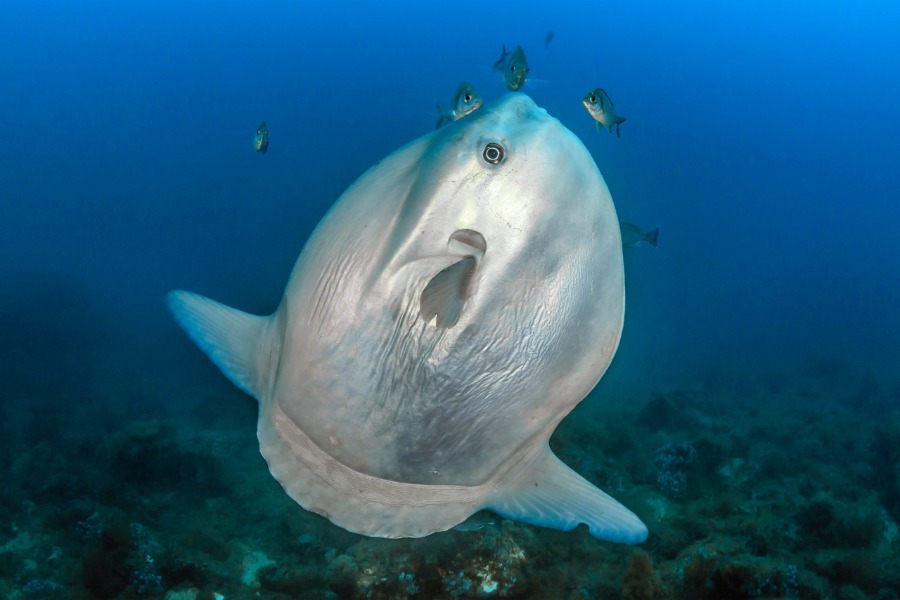
Mola mola are also known as ocean sunfish. These fish have large bones and can grow to 3 meters in length and weigh up to 2 tons. Although their appearance may seem like a “failed fish” due to their flat bodies, they are intelligent swimmers. Mola mola are fish that can control natural parasites in the ocean ecosystem.
The Bali ocean sunfish is very often seen in the waters of Nusa Penida. However, this fish is not a Mola Mola species, but rather a Mola alexandrine, a related but slightly different species. Among local divers and tourists, the two are considered the same species.
This fish swims at depths of up to 200 meters and feeds on jellyfish. Only during certain seasons does it rise from the depths and reach recreational divers. This is why the Mola Mola Nusa Penida is a highly sought-after diving phenomenon.
Read other articles about Nusa Penida:
- When Can You See Manta Ray Nusa Penida?
- Best Time to Dive in Nusa Penida: The Complete Guide 2026!
- Try PADI Open Water Course with Nusablu
Mola Mola Season: When is the Best Time?
The first question that always arises: when can you see Mola Mola?
The answer: Come between July and October to dive in Nusa Penida. Mola Mola season occurs during these months, with an upwelling phenomenon that brings water temperatures of 18–22°C to the surface. This cold water is rich in nutrients and can attract jellyfish to shallower layers.
This period of the month allows the water temperature to be cooler than usual. Divers who are not used to it will notice the difference. Cool water conditions signal that the Nusa Penida sunfish are active in accessible zones.
Best time tips:
- July–August: Highest chance of encountering them, found at depths of 20–30 meters.
- September–October: Peak season, seen at depths of only 5–10 meters.
- New and full moon phases significantly increase the chances due to the influence of gravitational currents.
Outside of this season, Bali ocean sunfish are still possible to see, but much rarer. So, if sunfish are your primary goal, plan your trip during these months.
Where are the Best Spots to See Mola Mola Nusa Penida?
1. Crystal Bay
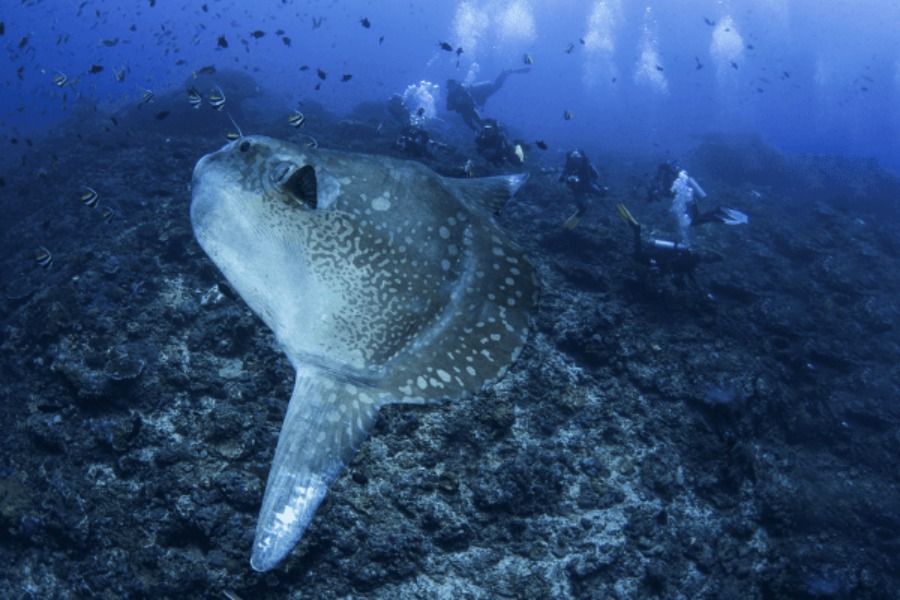
Nothing beats the Crystal Bay dive site for spotting sunfish. This beach is located west of Nusa Penida. Crystal Bay is known as the most consistent spot for ocean sunfish encounters. Water visibility can reach 30 meters, and there are several active cleaning stations on the reef slopes.
The optimal depth at Crystal Bay for viewing mola mola is 20–35 meters. Therefore, Advanced Open Water certification is highly recommended. However, there have been cases where mola mola have ascended to depths of only 5 meters, so even Open Water divers can get lucky.
2. SD Point (Sampalan)
SD Point is a secret that is starting to become known. Located on the northern side of Nusa Penida, it has many active cleaning stations frequented by mola mola, especially between September and October.
3. Sental
Sental offers beautiful underwater topography with steep slopes and coral crevices that are favorite resting spots for Nusa Penida’s mola mola. Currents here can be quite strong, so be sure to be accompanied by an experienced dive guide.
4. PED & Blue Corner
These two spots are located on the east and south sides of the island. Not as popular as Crystal Bay, but PED and Blue Corner are frequently noted for consistent encounters with mola mola.
What Depth Can You See a Mola Mola?
Nusa Penida’s sunfish are generally found at depths of 20–40 meters, especially early in the season. To dive safely at these depths, you need at least a PADI Advanced Open Water Diver certification.
However, this doesn’t mean open water divers are without a chance. As October approaches, the sunfish season also reaches its peak. These fish often ascend to depths of 10–15 meters and have even been recorded at depths of as little as 5 meters. For those without certification, Discover Scuba Diving still offers opportunities, although they rely more on luck.
What to Watch Out for When Encountering a Mola Mola?
Interacting with Bali ocean sunfish requires etiquette and patience. These fish are very sensitive to disturbance. Some rules to follow:
- Don’t approach too quickly. Let the sunfish determine its distance from divers.
- Don’t touch. Touching the sunfish’s skin can remove its protective coating and drive it away from the cleaning station.
- Maintain good buoyancy control. Excessive air bubbles directly beneath the mola mola can cause them to become disturbed and leave.
- Follow the dive guide’s instructions. Experienced guides understand the behavior of the mola mola in that spot and can position the group appropriately.
At Nusablu, every diver is guided by a PADI-certified instructor who is familiar with the behavior of the Nusa Penida mola mola in various current conditions and seasons.
Why Choose Nusablu to Dive with Mola Mola?
Nusablu Luxury Resort & Diving Center is located on Kutampi Kaler Hill, Nusa Penida. We are strategically located and close to some of the best mola mola spots. Benefits of diving with Nusablu:
- A team of PADI-certified instructors with extensive experience in the waters of Nusa Penida.
- Small guide-to-diver ratio for safety and a more personalized experience.
- A complete briefing before each dive, including predicted current conditions and sighting opportunities.
- Flexible dive packages, ranging from fun dives, private dives, to Advanced Open Water courses.
- Luxury accommodations at the same resort, so you can get optimal rest before your morning dive.
Staying at Nusablu Resort means waking up to views of Mount Agung in the distance, having breakfast on the rooftop, and then heading straight to the Crystal Bay dive site or other mola mola spots in no time. This is invaluable efficiency when you visit during mola mola season.
FAQ
Can mola mola be seen year-round in Nusa Penida?
Sightings of Mola Mola Nusa Penida outside of the season (July–October) are very rare. Although these fish live around the deep waters of Nusa Penida year-round, they only emerge from the depths when water temperatures drop due to seasonal upwelling. For the best chances, plan your dive in Nusa Penida between July and October.
Can beginner divers see mola mola?
Divers with Open Water certification still have a chance, especially in September–October when the Bali ocean sunfish move to shallower depths. The best opportunities are at depths of 20–30 meters, where Advanced Open Water certification is recommended. Nusablu offers an Advanced course that can be completed in two days in Nusa Penida.
How much does it cost to dive to see Mola Mola Nusa Penida?
At Nusablu, a fun dive package (two dives) starts at IDR 2,000,000 per person. This price includes complete equipment and a certified instructor. The destinations are adjusted according to daily and seasonal conditions, including the Crystal Bay dive site during peak mola mola season.
What’s the difference between mola mola and ocean sunfish?
Both refer to the same creature. “Mola mola” is the scientific name, while “ocean sunfish” is the English term for this fish’s habit of basking on the ocean surface. In Nusa Penida, the most commonly encountered species is actually the Mola alexandrine. Although divers still commonly refer to them as the Nusa Penida mola mola,
Are mola mola dangerous to divers?
Not at all. Bali ocean sunfish are non-aggressive creatures. They come to cleaning stations to remove parasites from their bodies. They generally ignore divers as long as they are not disturbed or approached too quickly. The only danger comes from currents in certain spots, such as Sental or Blue Corner, which are mitigated with guidance from the Nusablu instructor team.
Ready to Meet the Mola Mola Nusa Penida?
Of all the diving experiences you can try in the world, an encounter with the Mola Mola Nusa Penida is one you’ll never forget. These seemingly “misdesigned” creatures are actually a miracle and a highlight of diving in Nusa Penida’s waters.
So, plan your trip to Nusa Penida between July and October. During these months, you can explore the Crystal Bay dive site and other hidden spots with the Nusablu team. Let the Mola Mola season change your perspective on the wonders of the underwater world.
Ready to dive in Nusa Penida? Contact Nusablu now and book your dive slot before it runs out!