Nusa Penida Diving in June: Diving Conditions, Weather & What to Expect
June is one of the months most frequently asked about by prospective Nusablu guests. This month falls between the end of the transition season and the start of the best dry season in Bali. This season presents conditions that are both intriguing and important to understand fully before you book your flight.
For those planning a Nusa Penida diving trip in June, this article serves as a guide providing an overview of actual conditions based on firsthand diving experience here every day.
June in Nusa Penida: An Overview You Need to Understand
To accurately understand diving in Nusa Penida during June, you must first understand where June fits within Nusa Penida’s overall seasonal cycle.
Nusa Penida has two main seasons that significantly influence sea conditions. The dry season runs from April to October. Meanwhile, the rainy season runs from November to March. June falls in the middle of the dry season, offering more stable sea conditions compared to January or February.
This month brings sunnier and more predictable weather on most days. It’s certainly clear that sea conditions are much calmer than during the rainy season. Some days may show transitional weather, especially during the first week of June. However, statistically, this month is excellent for trying Nusa Penida diving.
Read Other Interesting Articles:
- Crystal Bay Nusa Penida Diving: Everything You Need to Know
- Manta Ray Diving in Bali: Why Nusa Penida is the #1 Spot
- Snorkeling in Nusa Penida: Best Spots, Tips & What to Expect
Diving Conditions in Nusa Penida in June
The core of this guide to Nusa Penida diving in June is to discuss the underwater conditions, which offer specific characteristics distinct from other months.
Visibility
Visibility in Nusa Penida in June falls into the “very good” category. Average visibility at main dive sites like Crystal Bay, Manta Point, and Toyapakeh ranges from 15 to 25 meters. This visibility is far better than during the rainy season, when it can drop to 8–12 meters. It approaches peak conditions in August–September, when it can reach 25–30 meters.
Water Temperature
Water temperatures in Nusa Penida begin to drop in June. In shallow zones, temperatures remain comfortable at 25 to 27 degrees Celsius, but at depths of 18 meters and below, temperatures start to drop to 22 to 24 degrees Celsius. A 3mm thin wetsuit is sufficient for the shallow zones, but for diving in Nusa Penida’s deeper zones in June, a 5mm wetsuit provides significantly greater comfort.
Currents
Currents in June for diving in Nusa Penida have already begun to strengthen compared to the earlier months of the year. At Crystal Bay, currents in the deeper zones can be quite significant, especially during high tide, and can change direction within minutes. At Manta Point, similar conditions occur with greater variation due to its more exposed location.
For experienced divers, June’s currents in Nusa Penida signal that the ocean is alive and ecologically productive. For beginners, this serves as a reminder that diving in Nusa Penida should always be done with a dive guide who is familiar with each site.
Marine Life You Can Encounter During June Diving in Nusa Penida
One of the strongest reasons to choose June for diving in Nusa Penida is the exceptionally rich and diverse marine life window during this month.
Manta Rays: Consistent Year-Round
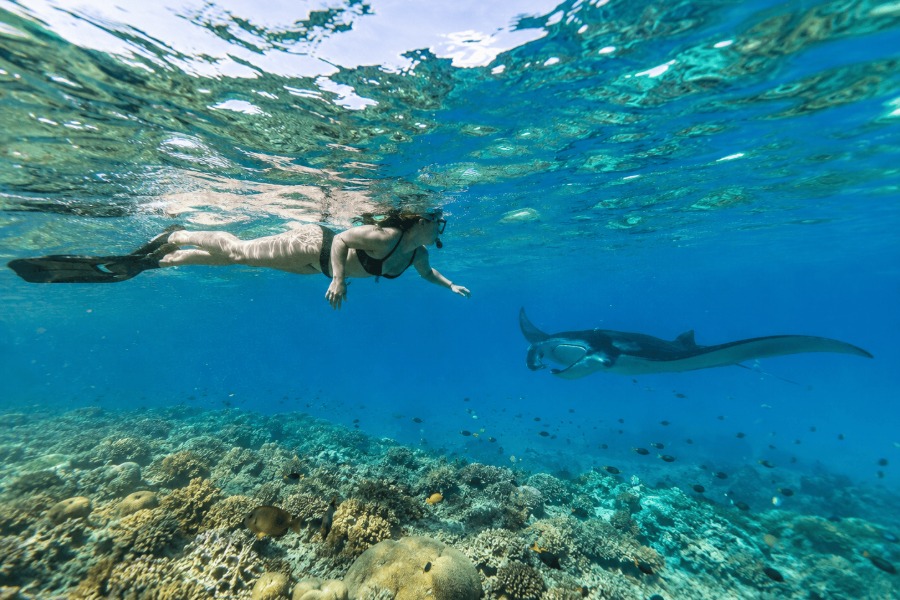
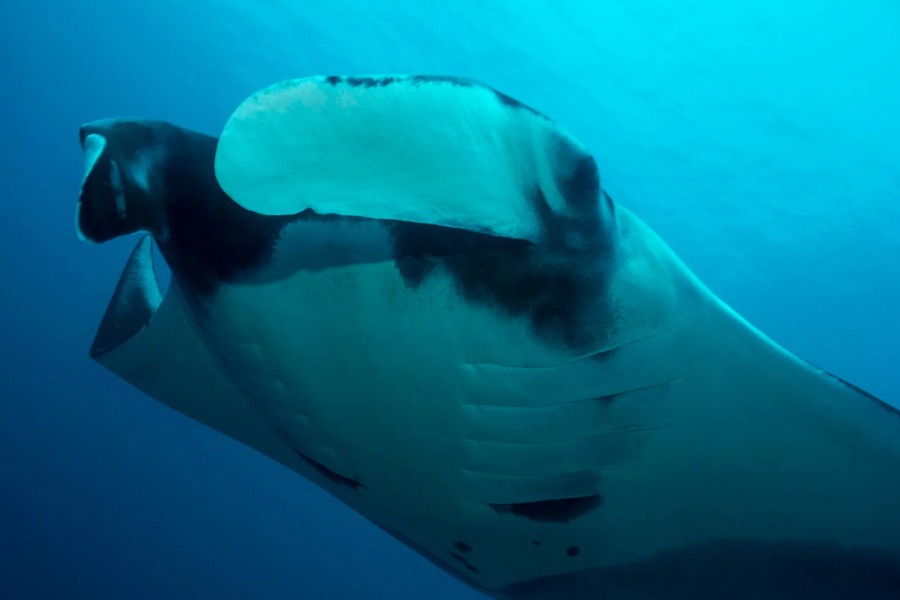
Manta rays are resident inhabitants of Nusa Penida and can be encountered every month without exception. Sighting chances at Manta Point and Manta Bay remain in the 85 to 90 percent range this month. Stronger currents in June actually bring more plankton to the cleaning station. Because of the abundance of plankton, manta rays often gather at this spot.
For manta ray diving in Nusa Penida in June, the best time is still in the morning before 10:00 AM. The Nusablu team will take participants to Manta Point around 7:30 AM from Toyapakeh to ensure they arrive at the spot before noon.
Sea Turtles
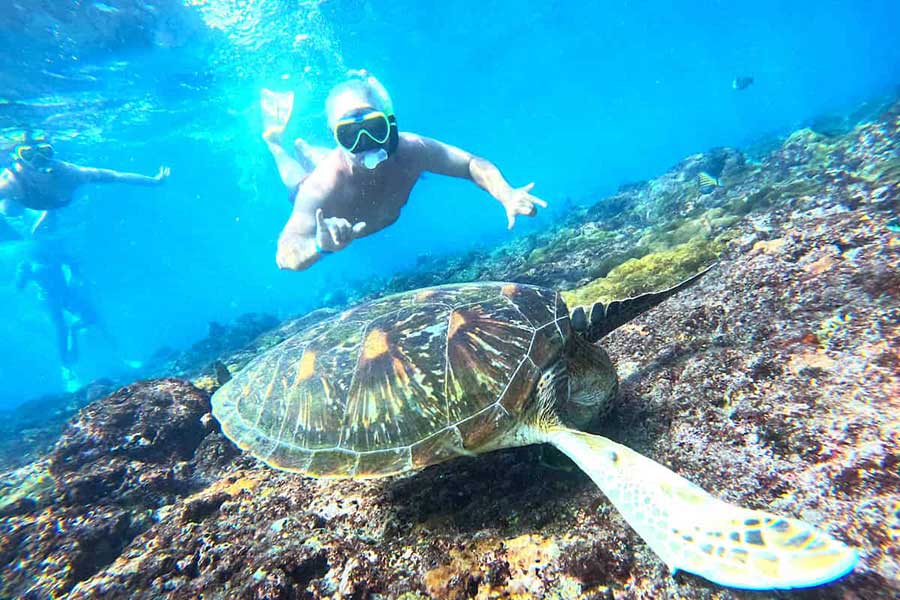
June is one of the busiest months for sea turtles in the waters around Nusa Penida. Green sea turtles and hawksbill sea turtles are particularly active in Crystal Bay, SD Point, and Gamat Bay. In Crystal Bay specifically, sea turtles are frequently spotted resting on large coral formations at depths of 5 to 10 meters, often very close to calm, non-intrusive divers.
Early Signs of Mola Mola
The best time to dive in Nusa Penida to see Mola Mola begins in July. However, some experienced divers at Nusablu have already started reporting sporadic sightings of Mola Mola in the deeper zones of Crystal Bay since late June, particularly in the last week of the month. These early appearances are inconsistent and cannot be guaranteed, but for those with flexible schedules, diving in late June offers a very attractive bonus opportunity.
Schooling Fish and Reef Life
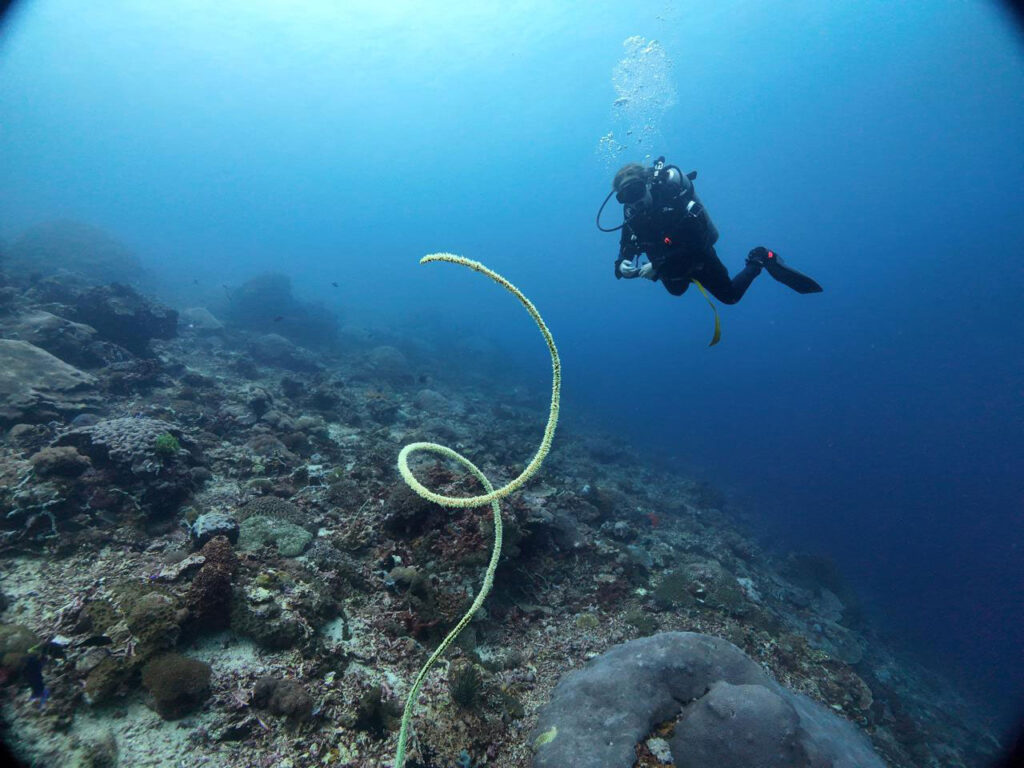
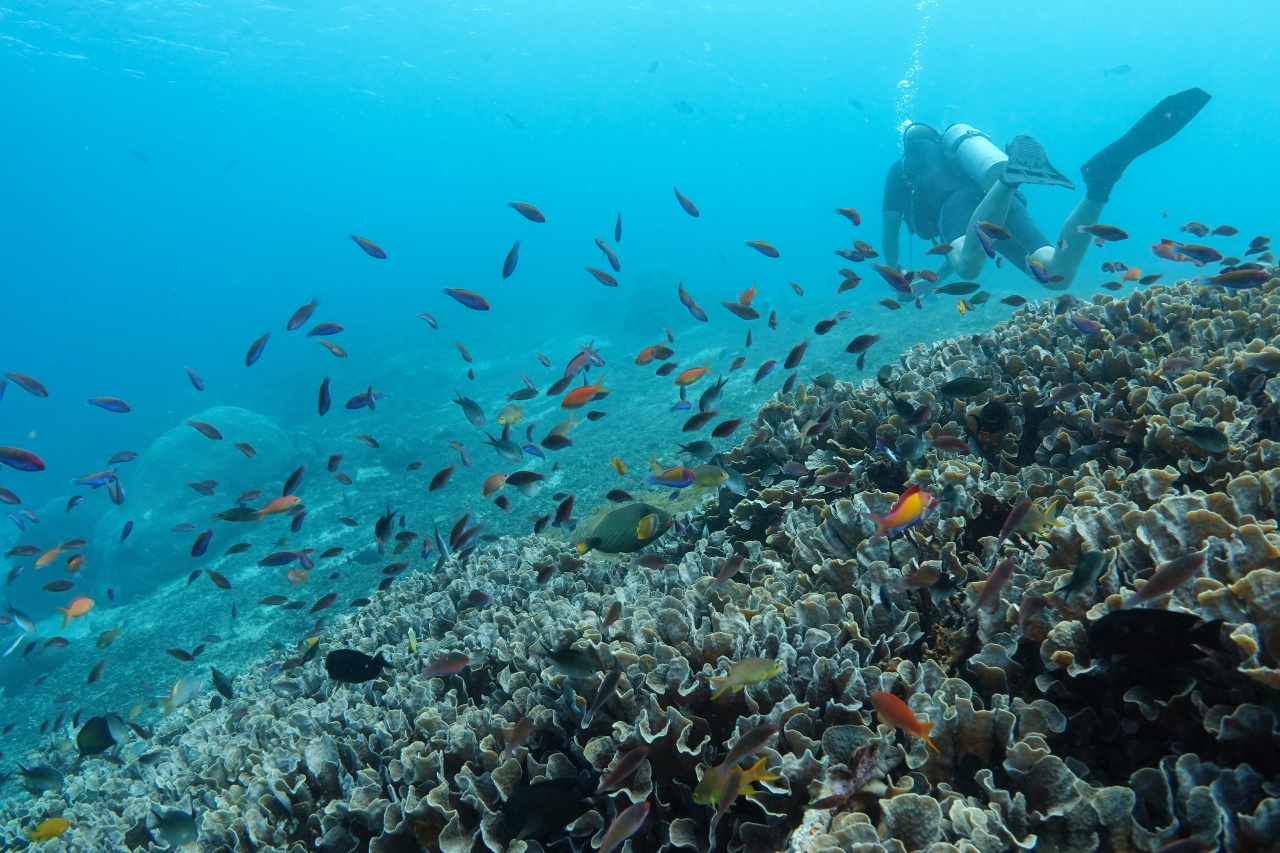
Reef life at all major Nusa Penida dive sites is in a very active state in June. Large schools of fish are visible at SD Point and Toyapakeh Wall. Soft corals in Crystal Bay are thriving in optimal conditions. High visibility makes the entire panorama look incredibly dramatic from a distance.
Best Time to Dive in Nusa Penida: June Compared to Other Months
To honestly answer the question about the best time to dive in Nusa Penida, here’s a brief comparison that puts June in the right context.
- April–May offers calmer seas with winds not yet as strong as in June, making it ideal for beginners and snorkelers. Water temperatures remain warm at all depths. No Mola Mola.
- June is a highly strategic transition point: diving conditions are already excellent, manta rays are consistently present, visibility is high, and there’s a chance of early Mola Mola sightings toward the end of the month. The open sea is slightly rougher than in May, but it’s still very suitable for divers of all levels.
- July–October is the peak season for divers targeting Mola Mola. Sea conditions are rougher, and water temperatures are cooler, but this offers the most complete Nusa Penida diving experience.
- November–March is the rainy season with the most unpredictable conditions. Diving is still possible, but the risks are higher and visibility is lower.
- In conclusion: Nusa Penida diving in June is a very solid choice. You get ideal conditions without having to contend with the crowds during the peak season of July–August.
Why Stay at Nusablu for June Diving
There are very important reasons why staying at Nusablu offers specific advantages for Nusa Penida diving compared to coming as a day tripper from Bali.
- First, Nusablu’s boats depart from Toyapakeh on Nusa Penida, not from Sanur. This saves 45 minutes of boat travel in each direction. In June, when the sea is rougher, this time savings isn’t just about efficiency—it’s about real physical comfort.
- Second, the Nusablu team monitors current conditions daily and has years of historical data on June sea conditions. This knowledge is used to select the most optimal spots and times each day, rather than following a rigid schedule.
- Third, as a resort guest, you have the flexibility to adjust your diving schedule to actual conditions at no extra cost. If morning conditions aren’t ideal for Manta Point, the Nusablu team will recommend the best alternative among Nusa Penida dive sites with more favorable conditions that day.
FAQ: Frequently Asked Questions About Diving in Nusa Penida in June
Is June a good time to dive in Nusa Penida?
Yes, June is an excellent time for diving in Nusa Penida. Sea conditions are in the dry season with visibility ranging from 15 to 25 meters, manta rays are consistently present, and the weather is generally sunny.
Can you see Mola Mola in June?
The official Mola Mola season begins in July, but sporadic early sightings have been reported in the last week of June in the deeper zones of Crystal Bay. Their appearances are not yet consistent, but this possibility adds an exciting bonus for those diving in late June.
What is the weather like in Nusa Penida in June?
The weather in Nusa Penida in June is generally sunny with air temperatures ranging from 24 to 31 degrees Celsius. Rain is very rare. Southeasterly winds begin to strengthen and create waves on the southern and southwestern sides of the island, but this does not stop diving activities.
What is the water temperature in Nusa Penida in June?
In shallow zones, temperatures range from 25 to 27 degrees Celsius. In deeper zones below 18 meters, temperatures can drop to 22 to 24 degrees Celsius. A 5mm wetsuit is highly recommended for diving in Nusa Penida at depths greater than 15 meters.
Is June considered the peak season in Nusa Penida?
June starts to get busy, especially from mid- to late-month, but it’s not as crowded as July–August. This is one of the advantages of diving in Nusa Penida in June: conditions are already excellent, but tourist numbers haven’t peaked yet, so dive sites are less crowded and the experience is more peaceful.
What gear should I bring for diving in June?
The essential gear to prepare for the best time to dive in Nusa Penida in June: a 5mm wetsuit, seasickness medication for the boat trip to open-water sites, an underwater camera, and a dry bag to protect your belongings.
Can beginners dive in Nusa Penida in June?
Yes, provided that beginners are always accompanied by an experienced dive guide and limit themselves to shallow zones up to 15 meters. Nusablu offers diving programs for beginners that take June’s current conditions into account, selecting the safest spots and times each day.