
Mola Mola Nusa Penida: When to See the Ocean Sunfish & Best Dive Sites
Mola mola are commonly found in the waters around Bali. They float at a depth of 30 meters. Every year, thousands of divers come to Bali to dive with these ocean sunfish.
Of all the locations they’ve visited, Mola Mola Nusa Penida offers the most consistent sightings. This guide will help you discover the must-visit locations and how to prepare for your dive.
Quick Summary
- The peak Mola Mola season runs from July through October.
- Crystal Bay is the most famous Mola Mola dive site in Nusa Penida.
- Sightings generally occur at depths of 20–40 meters.
- An Advanced Open Water certification is highly recommended.
What Is the Mola Mola (Ocean Sunfish)?
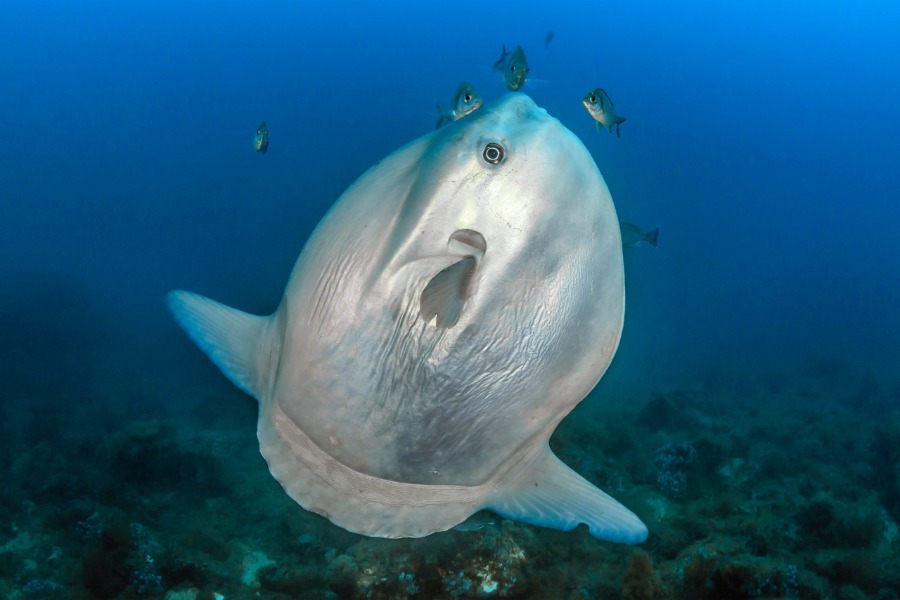
The mola mola is also known as the ocean sunfish. It is one of the largest bony fish on Earth. Adult specimens can exceed two meters from the tip of the dorsal fin to the anal fin. Mola mola also weigh around 2,000 kilograms.
Its body shape is similar to other fish, featuring a large round head, two long fins that move like a mermaid’s tail, and a rear section called the clavus (false tail) formed by fused fins.
This fish frequently visits cleaning stations on coral reefs, which serve as special spots where small fish help remove parasites from its body. The Mola Mola will swim slowly or remain nearly motionless for hours. It is this behavior that makes it a bucket-list dive for millions of divers worldwide.
Why Nusa Penida Has the Highest Sighting Rate Globally
Nusa Penida occupies a very unique geographical position. In the narrow strait between Nusa Penida and Nusa Lembongan, a seasonal upwelling phenomenon occurs. This phenomenon involves nutrient-rich cold water from the depths of the Indian Ocean being pushed upward by seasonal current dynamics. It is this phenomenon that creates a sharp thermocline at depths of 20–40 meters.
Mola Mola thrive in these conditions. They rise from the deep waters to warm themselves in shallower layers, while also taking advantage of the cleaning stations that form along Nusa Penida’s coral reefs. No other place in the world consistently offers this combination: strong upwelling, active cleaning stations, and depths still accessible to recreational divers.
Read More Other Articles:
- Best Snorkeling in Nusa Penida: What You Must Know
- Scuba Diving Nusa Penida: Swim with Manta Rays in Bali
Mola Mola Season in Nusa Penida: The Best Months
Peak Season July–October: The Thermocline & Upwelling Effect
The Mola Mola season in Bali consistently runs from July through October, peaking in July and August. During this period, water temperatures in Nusa Penida drop significantly due to intense upwelling from the Indian Ocean.
Temperatures at depths of 25–35 meters can reach 18–20°C—much cooler than the average for tropical waters. It is this drop in temperature that encourages Mola Mola to ascend more frequently and for longer periods to cleaning stations at depths accessible to divers.
During the peak months, local dive operators like Nusablu often record sightings almost every day at the main sites. These conditions are unique to this area. If Mola Mola is on your bucket list, July through October is the time to go.
Off-Season Chances: What to Realistically Expect
Outside the peak season, the chances of spotting a Mola Mola still exist but are much lower. A few sightings have been recorded in late May or early June when upwelling occurs earlier than usual, and occasionally in February–March during unexpected thermocline events. However, let’s be honest: if your main goal is to see a Mola Mola, don’t plan a trip outside the peak season and hope for luck.
The good news is that Nusa Penida still offers world-class diving experiences year-round. Manta rays are present almost every month, the coral reefs are always vibrant and colorful, and conditions during the rainy season (November–March) are actually quieter and more budget-friendly.
Best Dive Sites to See Mola Mola Nusa Penida
Crystal Bay: The Iconic Mola Mola Hotspot
Crystal Bay—or “Crystal Bay Mola Mola”—is a site frequently discussed by divers. It features two main reef corners (known as the “first corner” and “second corner”) that serve as active cleaning stations for Mola Mola throughout the season.
The effective depth for sightings at Crystal Bay is 20–35 meters, with visibility reaching 25–30 meters on the best days. Divers should understand that a slight drop in visibility at depth is not a bad sign.
Blue Corner, Toyapakeh & Gamat Bay: Alternative Cleaning Stations
- Blue Corner — An advanced drift dive site with strong upwelling. The currents here can be very strong, but it is precisely these conditions that attract Mola Mola to the area around its cleaning station. For experienced divers only.
- Toyapakeh Wall — A coral wall off the northern coast of Nusa Penida with strong but predictable currents. Mola Mola are occasionally spotted here during periods of active thermocline, along with an extraordinary abundance of marine life.
- Gamat Bay — Sightings in Gamat Bay are less frequent than at the two sites above, but when sea conditions are very cold and upwelling is strong, Mola Mola have been recorded appearing here. The upside: it’s much less crowded.
How Deep Do You Need to Dive to See One?
On average, Mola Mola sightings occur at depths of 20–40 meters, with the majority in the 25–35-meter range. Early in the season or in the afternoon when the sun warms the upper layers, Mola Mola sometimes rise to 15–18 meters. Occasionally, they’ve even been spotted deeper than 40 meters by divers with a deep dive specialty certification.
The most important factor at these depths is solid buoyancy control. Divers who cannot maintain a stable depth will struggle to observe this slow-moving fish without disturbing it or losing their position. This is one of the reasons why advanced certification is highly recommended.
Do You Need Advanced Certification to See Mola Mola Nusa Penida?
The Advanced Open Water course is highly recommended. Most leading operators in Nusa Penida, including Nusablu, require Advanced Open Water certification to see the Mola Mola in Crystal Bay. The main reasons are:
- First, strong currents. Currents in Nusa Penida can change suddenly, and the ability to manage negative entry, drift diving, and cross-currents are skills taught only at the Advanced Open Water level and above.
- Second, the required dive depth. Depths of 25–35 meters fall outside the comfort zone of Open Water certification (18 meters) and require a better understanding of no-decompression limit management and air consumption.
- Third, the sudden thermocline. A drop in water temperature from 26°C to 18°C within just a few meters can panic divers who aren’t used to it. Experienced divers will respond to these conditions with far greater composure.
Open Water divers can still fully enjoy Nusa Penida. However, for the true Mola Mola Nusa Penida experience, an advanced certification opens all doors. Nusablu offers the PADI Advanced Open Water course in Nusa Penida right in the same waters.
Tips for the Best Mola Mola Nusa Penida Dive Experience
Best Time of Day & How to Read Conditions
Morning dives before 9:00 AM offer the best chance for sightings. Mola Mola tend to rise to cleaning stations when the water is still cool from the previous night. Another advantage of morning dives is that the area is much less crowded before the day-trip groups from Sanur arrive.
Before each dive, a Nusablu guide will brief you on the day’s sea conditions: current direction and strength, thermocline position based on the latest data, and which sites are most promising.
What NOT to Do Around Mola Mola
- Do not chase or approach too quickly — Always approach from the side, slowly, without sudden movements.
- Do not touch — In addition to violating the code of ethics for responsible diving, physical contact will cause the Mola Mola to flee immediately.
- Do not block the cleaning station — Position yourself behind or to the side of the fish, not between the fish and the open water column. Blocking its escape route is the most common mistake.
- Avoid excessive use of flash — A blinding camera flash will startle the Mola Mola. Turn off the flash before entering the water and rely on natural light or a dim video light.
Dive with Mola Mola at Nusablu
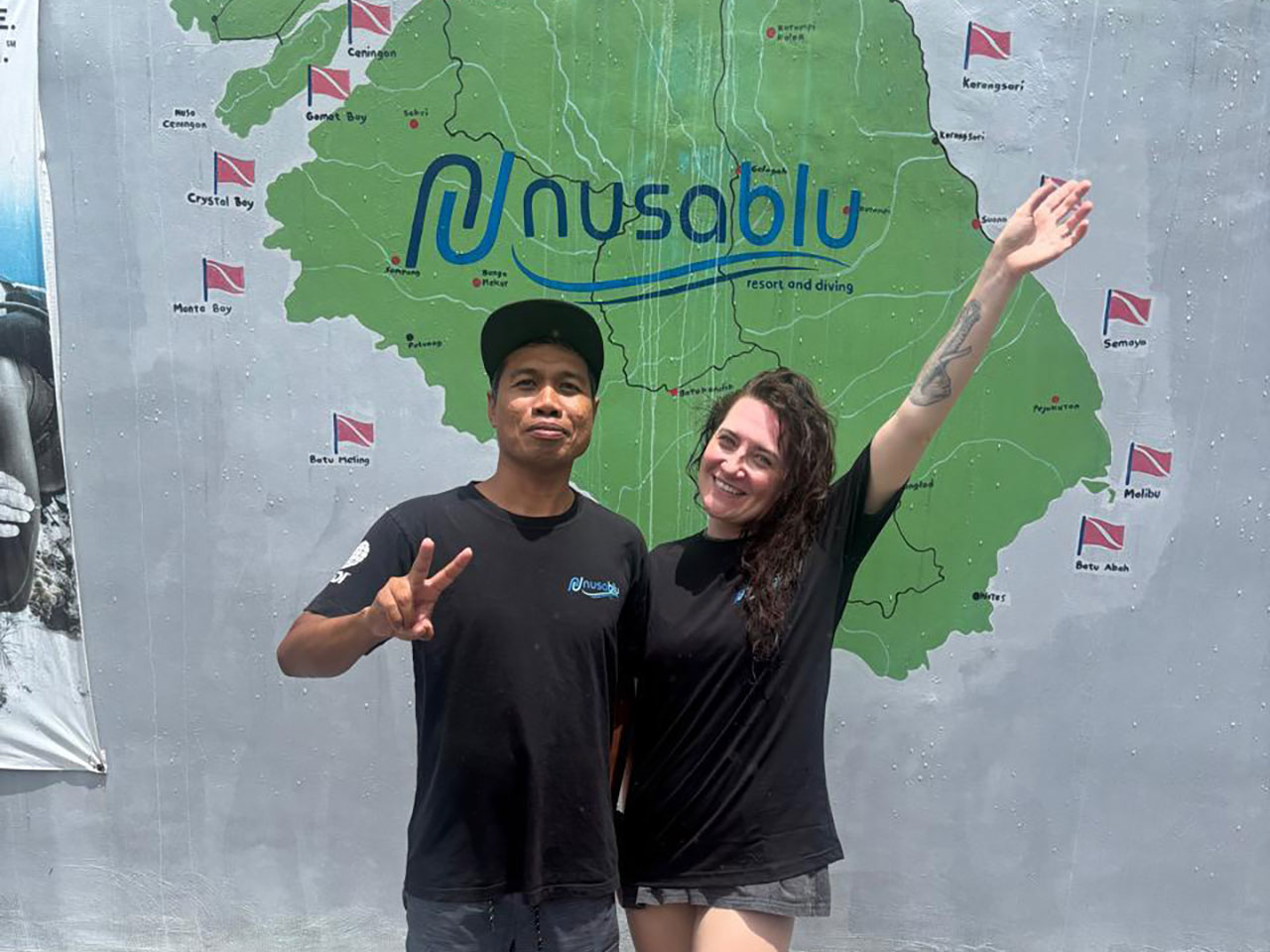
Nusablu is a PADI 5-Star Dive Center based right in Nusa Penida. Our dive guides have logged hundreds of dives in Crystal Bay and surrounding sites; they understand daily current patterns, identify active cleaning stations, and know how to assess ocean conditions before you even enter the water.
Every day during the Nusa Penida Mola Mola season (July–October), we update site conditions in real time and adjust dive plans based on actual data. All trips use boats equipped with oxygen, marine radios, and international-standard safety equipment.
We offer:
- Mola Mola Fun Dive — For certified divers who want to dive right away in Crystal Bay and surrounding sites
- PADI Advanced Open Water Course — Get the certification you need, right in the waters of Nusa Penida
- Nusa Penida Dive & Stay Package — Combine a few days of diving with accommodations at our resort for the best chance of sightings
Where to start? If this is your first time diving in Nusa Penida, our Discover Scuba Diving Nusa Penida page is the perfect place to begin.
Ready to dive with the Mola Mola? Contact Nusablu and book your trip now — spots during the peak season in July and August fill up fast.
FAQ: Mola Mola Nusa Penida
When is Mola Mola season in Bali?
Mola Mola season in Bali runs from July through October, with the highest chances of sightings in July and August. During this period, cold upwellings from the Indian Ocean lower the water temperature around Nusa Penida and drive the Mola Mola up from deeper waters to cleaning stations accessible to divers.
What certification do you need to dive with Mola Mola Nusa Penida?
PADI Advanced Open Water (AOWD) certification is highly recommended. Most Mola Mola sightings occur at depths of 20–35 meters at sites with significant currents.
Is a Mola Mola sighting guaranteed in Nusa Penida?
No dive operator can guarantee an encounter with wildlife. However, Nusa Penida has the highest rate of consistent Mola Mola sightings in the world. Dives are especially recommended during July–August, when encounters at Crystal Bay occur almost daily.
Can you see Mola Mola while snorkeling in Nusa Penida?
Most sightings occur at depths of 18–35 meters, which can only be reached by scuba diving. For the best chance of encountering Mola Mola Nusa Penida, scuba diving with the appropriate certification is the only reliable option.
What is the difference between Mola Mola and Mola alexandrini?
Mola mola (ocean sunfish) and Mola alexandrini (bump-head sunfish) are two distinct species from the same family. The fish most commonly seen in the waters around Nusa Penida is scientifically classified as Mola alexandrini. However, the term “Mola Mola” has become the common name used by the entire diving community, operators, and media in Bali without exception.
Why Nusa Penida Is the Best Place in the World to See Mola Mola
No other place on Earth consistently offers encounters with ocean sunfish at depths accessible to recreational divers. The combination of Indian Ocean upwellings, active natural cleaning stations, and perfectly formed ocean conditions makes the Mola Mola experience in Nusa Penida truly unparalleled.
The Nusablu team is ready to guide your underwater journey. From today’s sea conditions to trip planning tailored to your certification level, we’re here to ensure you get the best opportunities. Contact us now and start planning your Mola Mola dive with Nusablu.