Manta Point Snorkeling: Is It Worth the Hype? (Honest Guide)
If you have ever scrolled through travel feeds looking at Indonesia, you have undoubtedly seen the hypnotic, sweeping footage of massive black and white creatures gliding through crystal-clear water. For many ocean lovers, the opportunity to swim with manta rays bali is a non-negotiable bucket-list item. The undeniable epicenter for this experience is a rugged coastal cliff edge on the south side of Nusa Penida.
However, before you book the first ticket you see, it is crucial to understand what this excursion actually entails. The ocean here is wild, the cliffs are unforgiving, and the environment is vastly different from a calm resort swimming pool. As someone who has bobbed in these specific swells and witnessed these majestic animals up close, I can assure you that manta point snorkeling is a world-class experience—but only if you arrive with the right expectations and preparation.
Here is the honest, unvarnished truth about what it takes to safely and responsibly interact with the gentle giants of the Indian Ocean.
1. Why Manta Point Snorkeling is a World-Class (Yet Wild) Experience
To appreciate the experience, you must first understand why the mantas congregate here in the first place. Manta Point is not a feeding ground; it is the marine equivalent of a day spa.
The Science of the “Cleaning Station”
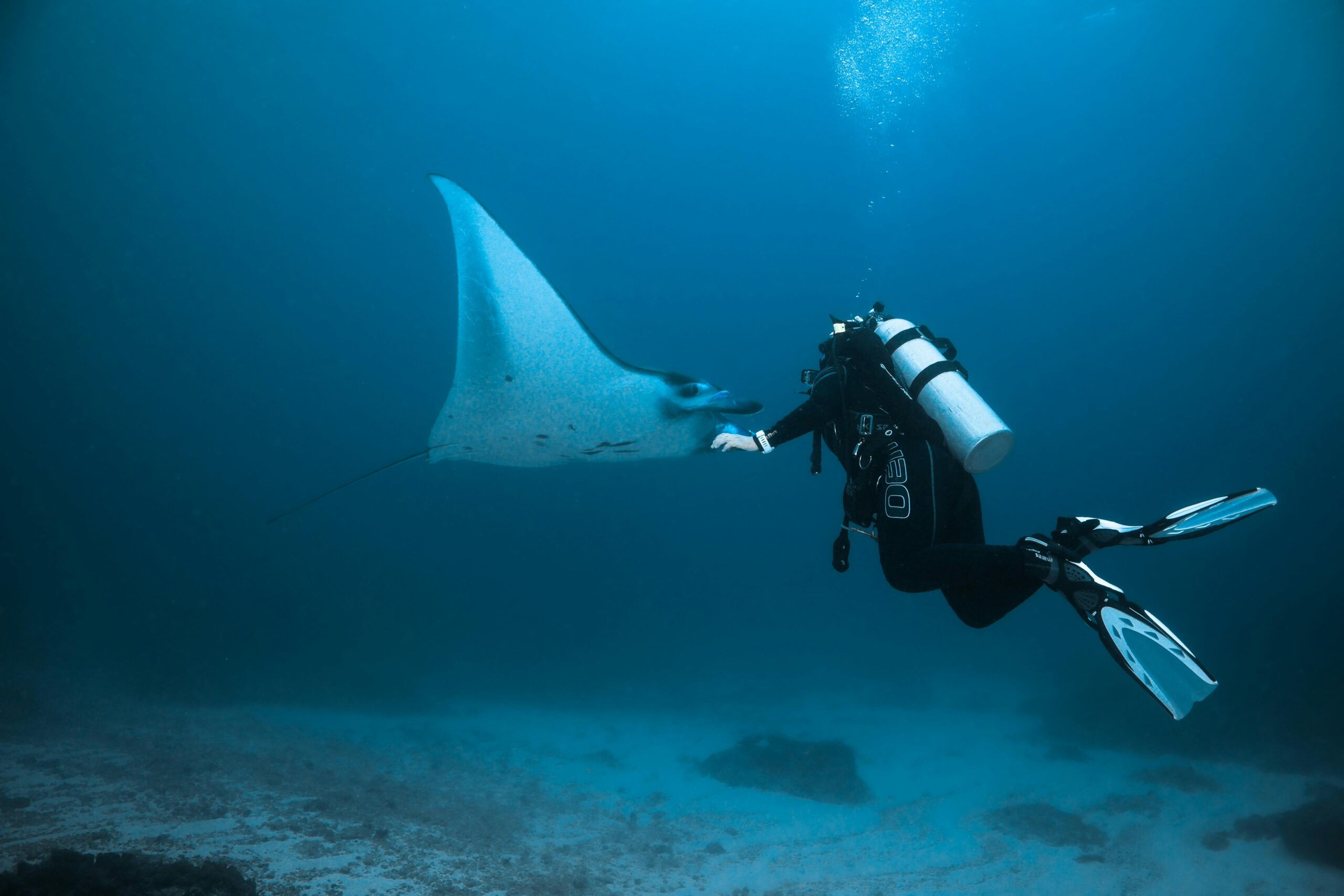
Beneath the surface lies a series of large submerged rocks known as “cleaning stations.” Reef mantas (Manta alfredi), which can boast wingspans of up to 4 meters, navigate to these specific rocks so that tiny wrasse fish can pick parasites and dead skin off their bodies and gills.
Because they are focused on getting clean, they tend to circle the same area repeatedly. For snorkelers floating on the surface, this behavior provides a spectacular, prolonged viewing opportunity as the mantas swoop upward toward the light.
Wild Encounters vs. Controlled Environments
It is vital to remember that this is an open ocean environment, not an aquarium. The mantas are completely wild. While the success rate for sightings is exceptionally high, there are days when the ocean is too rough to safely enter, or the mantas simply decide to be elsewhere. Embrace the unpredictability; it makes the moment they finally emerge from the deep blue infinitely more rewarding.
Read More Other Articles:
- Chasing Mola Mola in Bali: Where, When & How to See Them
- Nusa Penida Advanced Open Water: What Comes After Open Water?
2. Surviving the Manta Point Boat Trip: The Honest Truth
The journey to the site is often the most underestimated part of the entire adventure. The southern coast of Nusa Penida is exposed directly to the powerful currents and weather systems of the open Indian Ocean.
The Reality of Ocean Swells
Your manta point boat trip will likely depart from a calmer northern harbor, such as Toyapakeh or Sanur. As the speedboat rounds the dramatic southern cliffs, you will immediately feel the shift in the ocean’s energy. The swells here can be massive—sometimes lifting the boat several meters before dropping it back down. It is a thrilling, albeit bumpy, ride.
Effectively Managing Motion Sickness
If you are even remotely prone to seasickness, you must take marine-safe motion sickness medication at least one hour before you step onto the boat. Waiting until you feel nauseous is too late.
Once on board, stay hydrated, keep your eyes fixed on the distant horizon, and avoid staring down at your phone. When the boat stops at the snorkeling site, the rocking motion intensifies. Often, the best cure for nausea is to get off the boat and into the cool water as quickly as possible.
3. Selecting the Right Nusa Penida Snorkeling Tour
Not all tour operators are created equal. Because this activity has exploded in popularity, dozens of boats flock to the site daily. Choosing a reputable operator is the difference between a chaotic scramble and a serene marine encounter.
Prioritize Safety Over Bargains
When booking a nusa penida snorkeling tour, look beyond the lowest price. You want an operator that provides well-maintained life jackets, high-quality masks that do not leak, and comfortable fins.
More importantly, ask about their guide-to-guest ratio. A reputable company will put an experienced guide in the water with you, carrying a life ring or floatation device, ensuring no one drifts away in the current.
The Value of the “Early Bird” Strategy
Crowds are the biggest downside to this location. By mid-morning, Manta Point can look like a congested parking lot of speedboats. To get the most magical experience, find an operator willing to depart at dawn. Arriving at the site before the masses not only gives you a more private encounter with the mantas but also allows you to enjoy calmer morning sea conditions.
4. When to Go: Decoding the Best Month for Manta Rays
Unlike other marine megafauna that migrate thousands of miles, the reef mantas of Nusa Penida are resident year-round. Technically, you can see them any day of the year. However, weather and water conditions heavily dictate your overall comfort.
The Dry Season Advantage
Generally, the best month for manta rays in terms of overall conditions falls within the dry season, specifically from May to October. During this window, you will encounter less rainfall and generally better underwater visibility.
August and September often bring cold upwellings (thermoclines) from the deep ocean. While this chilly water (sometimes dropping to 20°C / 68°F) can be a shock to the system, it is nutrient-rich and often attracts the largest numbers of mantas.
Navigating the Wet Season
You can absolutely still snorkel from November to April, but you must be flexible. The wet season brings stronger winds and unpredictable surface chop, which can occasionally force harbor masters to cancel boat trips for safety reasons. If you travel during this time, build a few buffer days into your itinerary just in case your tour gets rescheduled.
5. How to Safely and Respectfully Swim with Manta Rays Bali
When you finally spot a dark shadow rising from the depths, adrenaline will take over. It is imperative that you channel that excitement into respectful behavior.
The Golden Rule: Do Not Touch
Manta rays have a protective mucus coating on their skin that prevents infections. If human hands touch them, this vital layer is wiped away, leaving the animal highly vulnerable to disease. Keep your hands crossed across your chest or firmly by your sides.
If a manta swims directly toward you (which they often do out of curiosity), simply stay calm, remain still, and let the animal adjust its course.
Surface Etiquette and Calm Movements
Because you are snorkeling on the surface, your job is to float calmly. Do not aggressively splash, shout, or aggressively kick your fins in an attempt to chase a manta. Chasing them only frightens them away. The most successful snorkelers are the ones who float quietly and let the curious mantas come up to investigate them.
In conclusion, manta point snorkeling is not your average tropical holiday excursion; it is a raw encounter with the powerful forces of nature. Yes, the boat ride will probably bounce you around, and yes, the water might give you a momentary chill.
Why Nusablu Is the Right Choice for Your Manta Point Trip
Seeing manta rays at Manta Point is an incredible experience, but that experience depends heavily on who takes you there. Large waves, strong currents, and the location’s distance from the harbor make choosing the right tour operator the most important decision for this trip.
Nusablu thoroughly understands the characteristics of the waters south of Nusa Penida, from the optimal departure time to avoid large waves and crowds, to how to safely position guests around the cleaning station without disturbing the manta rays. Their team is accustomed to assessing daily sea conditions, so decisions to proceed or postpone a trip are based entirely on safety, not just on sticking to a schedule.
Here are a few reasons why many travelers choose to book snorkeling or diving trips with Nusablu:
- Experienced guides who understand manta ray behavior and know the best cleaning station locations at Manta Point and Manta Bay.
- High-quality snorkeling gear, including life jackets and wetsuits to help you cope with the cold water caused by the thermocline.
- An “early bird” departure strategy, so you can enjoy calmer waters and more intimate encounters before the area gets crowded with other boats.
- A safe guide-to-guest ratio, ensuring no guest is swept away by the current alone.
- An ethical approach, in line with the principles of maintaining a safe distance and not touching the manta rays.
Frequently Asked Questions (FAQ)
1. Is Manta Point snorkeling safe for non-swimmers?
While you do not need to be an Olympic swimmer, you absolutely must be comfortable in deep, rolling water. Reputable tours will provide life jackets, and the high salt content of the ocean makes floating easy.
2. Are manta rays dangerous? Do they sting?
No, manta rays are completely harmless to humans. Unlike stingrays, manta rays do not have a stinging barb on their tails. They also do not have teeth designed for biting; they are filter feeders that consume microscopic plankton.
3. How cold is the water at Manta Point?
The water temperature can be surprisingly cold compared to the rest of Bali, typically ranging from 22°C to 26°C (71°F to 79°F), and occasionally dropping colder due to deep-sea thermoclines.
4. Can I bring my own snorkeling gear?
Yes, and it is highly recommended if you have it! A mask that perfectly fits your face prevents leaking, which is the number one cause of anxiety for snorkelers. However, full-face snorkeling masks are generally discouraged by professionals here.
5. Will I see anything else besides Manta Rays?
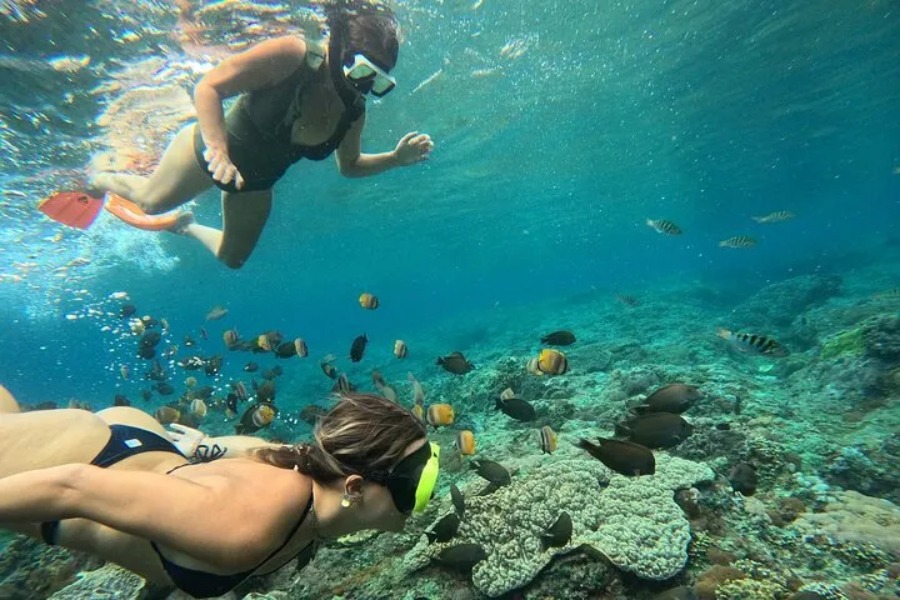
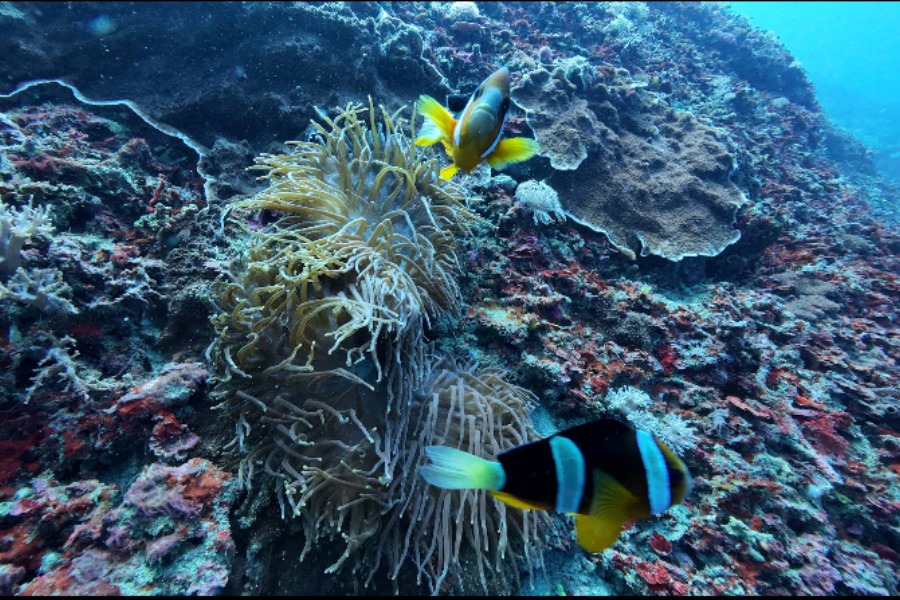
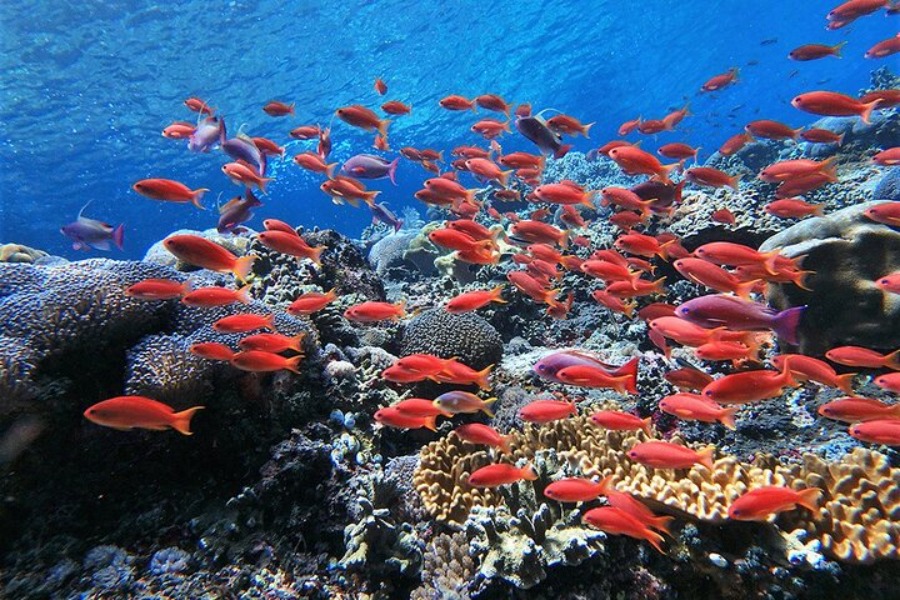
While mantas are the main attraction, the limestone cliffs and shallow reefs surrounding the area are teeming with life. You might spot sea turtles, blue-spotted stingrays, octopus, and massive schools of colorful tropical fish.
6. What is the exact difference between Manta Bay and Manta Point?
This is a common point of confusion. Manta Bay is a series of shallow coves closer to the northern harbor. The water is generally calmer, but the mantas here are usually feeding at the surface, moving quickly. Manta Point is further south, deeper, and features the actual “cleaning stations” where mantas linger longer.
7. Do I need to be able to freedive to get a good view?
Not at all. In fact, freediving down to the cleaning stations is often discouraged as it can disrupt the mantas’ natural behavior and scare them away. The best and most prolonged views happen when you simply float quietly on the surface and let the mantas swoop upward toward you.
8. How long does the boat trip take to reach the site?
If you depart from the main harbors of Nusa Penida (like Toyapakeh), the boat ride typically takes about 45 minutes to an hour to reach Manta Point, depending on the ocean conditions.
9. What essentials should I pack for the boat?
Space on small speedboats is limited. Bring only the essentials: a micro-fiber towel, marine-safe motion sickness medication, a reusable water bottle, and most importantly, reef-safe sunscreen. Avoid chemical sunscreens that damage the delicate marine ecosystem.
10. Can I take photos or use a flash underwater?
You can absolutely bring a waterproof camera like a GoPro to capture the moment you swim with manta rays bali. However, never use a flash or strobe light. The sudden burst of light can easily startle the mantas, causing them to flee the cleaning station.