Manta Point vs Manta Bay: Which One Should You Choose?
Nusa Penida has long been a magnet for divers and underwater adventurers from all corners of the globe. As local dive experts at Nusablu, we hear one question more than any other: manta point vs manta bay, which should you pick? Both locations are world-renowned as the ultimate spots for where to see manta rays nusa penida. Even so, they offer completely different environments, underwater topography, and challenges.
Two Manta Ray Hotspots, Two Very Different Experiences
At first glance, both sites share one thing in common: a healthy, year-round resident population of reef manta rays (Mobula alfredi). Nutrient-rich upwellings from the deep Indian Ocean make Nusa Penida an ideal habitat for them. Beyond that shared marine life, though, the core environmental characteristics of manta bay vs manta point diving could not be more contrasting.
Manta Point is a classic marine cleaning station on the exposed southern coast of the island, facing the open Indian Ocean. It is deep, grand, and often demanding. Manta Bay, on the other hand, is a collection of shallow, interconnected bays tucked along the northwestern coast.
This site works mainly as a feeding station, where nutrient-dense plankton gets trapped inside rocky, shallow coves. Understanding this basic difference will help you set the right expectations for how the animals behave, and which site suits you best.
Read More:
- Crystal Bay Nusa Penida Diving: Everything You Need to Know
- Manta Ray Diving in Bali: Why Nusa Penida is the #1 Spot
Manta Point: The Classic Dive Site
Location, Depth & Typical Conditions
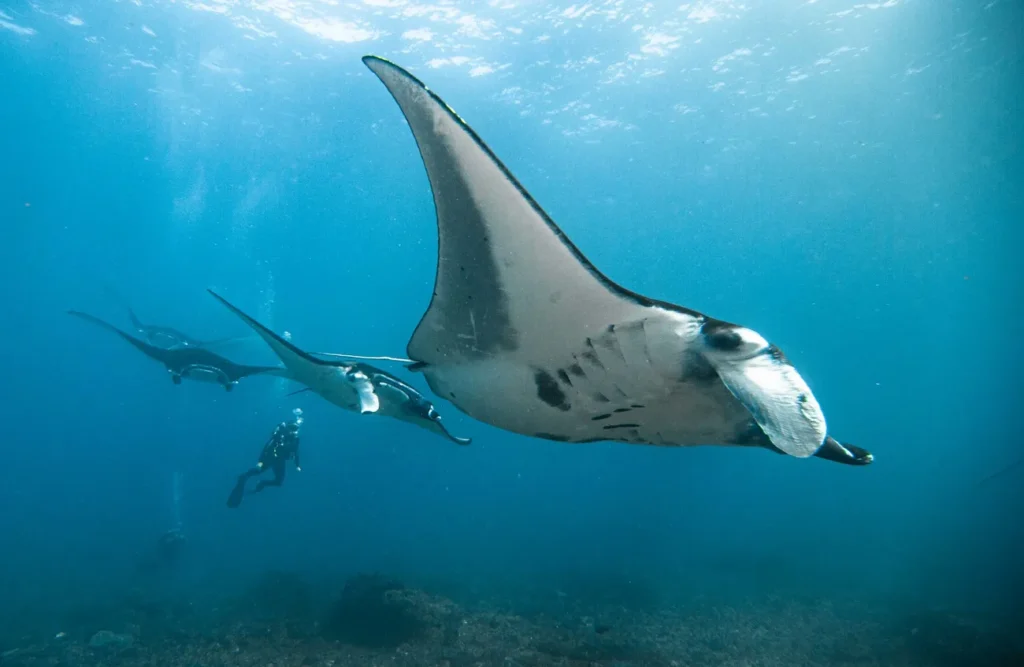
Manta Point sits at the base of the towering limestone cliffs on Nusa Penida’s southern edge. The main diving area ranges from 10 to 25 meters deep. Sloping boulder fields and massive, isolated coral bommies make up the underwater topography, and they serve as natural grooming stations for the mantas. When it comes to manta point diving conditions, visibility is highly volatile. It can range anywhere from 8 to 20 meters, depending heavily on tidal shifts and seasonal plankton blooms.
Current & Wave Conditions
Because Manta Point faces the open ocean without any natural barriers, it’s notorious for large surface swells. These swells generate a powerful underwater surge, a back-and-forth water motion that you can feel strongly even at 15 meters.
On top of that, deep-sea upwellings can drop water temperatures sharply to a chilly 20–22°C. So, navigating these manta point diving conditions calls for solid finning technique and excellent buoyancy control, keeping you steady and relaxed instead of drifting into sharp rock formations.
Best for Certified Divers
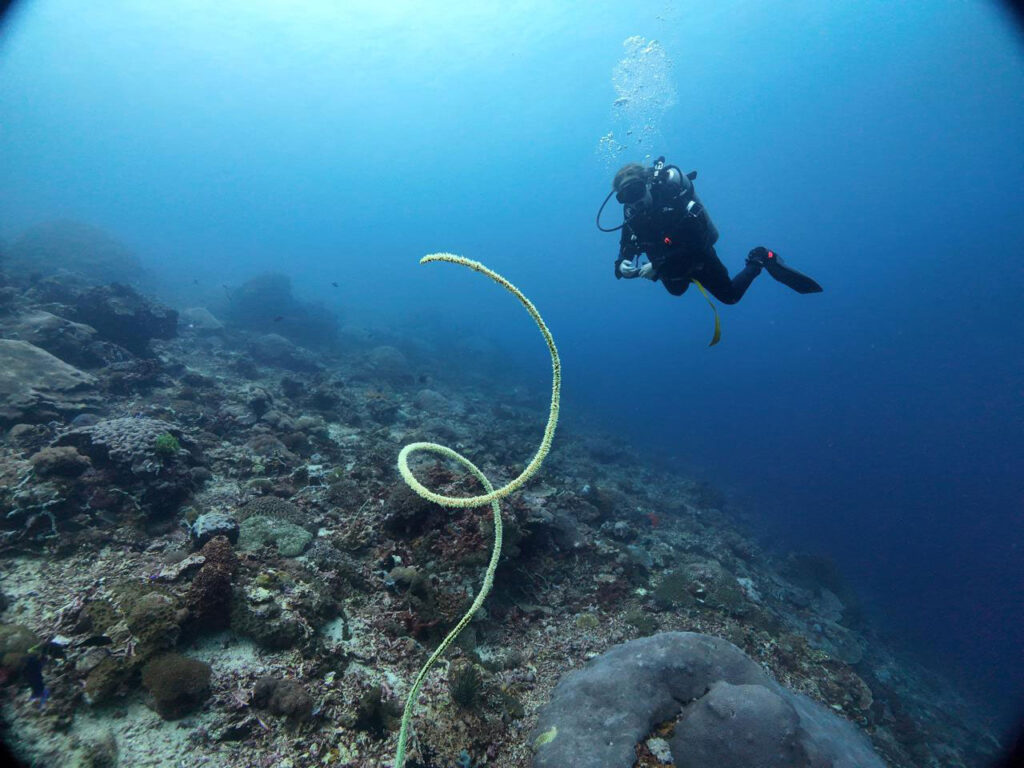
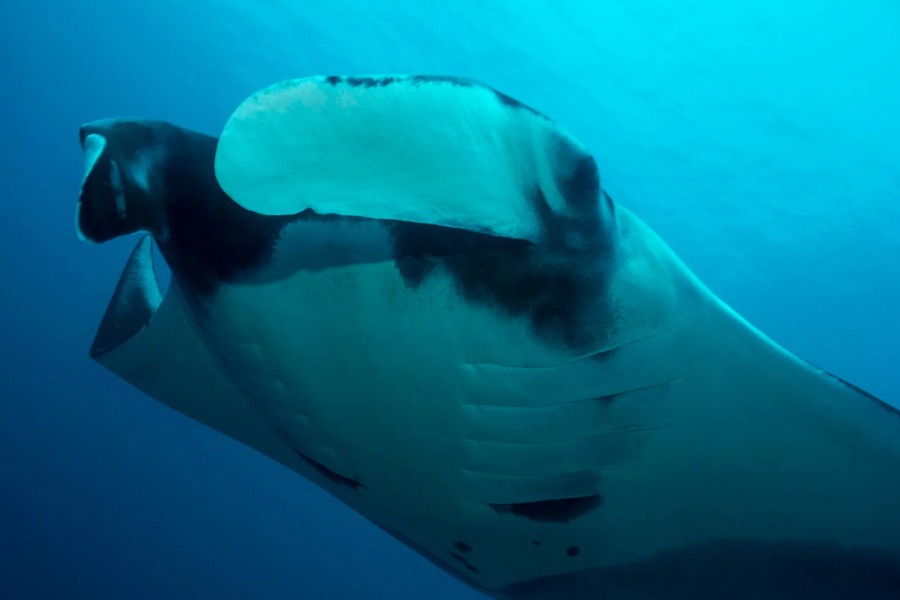
Because of its depth and exposure to heavy oceanic forces, Manta Point is a site built for certified scuba divers. It’s an ideal playground for anyone holding a manta point open water diver license or higher. At the primary cleaning station, you can hover calmly or kneel on the rocky bottom while a dozen mature manta rays, with wingspans stretching 3 to 5 meters, glide in hypnotic loops right over your head.
Manta point snorkeling is possible when the seas are completely flat. However, the rolling surface swell usually leaves non-diving snorkelers highly prone to seasickness.
Manta Bay: The Calmer, Beginner & Snorkeler-Friendly Option
Location, Depth & Typical Conditions
Over on the northwestern coastline, Manta Bay offers a far more sheltered environment. Instead of a single point, it’s a series of three shallow recesses flanked by tall karst cliffs. The depth here stays remarkably shallow, averaging only 4 to 12 meters, with a seabed of white sand mixed with hardy coral patches. Since it’s protected from the massive southern ocean rollers, the surface water stays significantly calmer with minimal turbulence.
Why It’s Ideal for Snorkelers
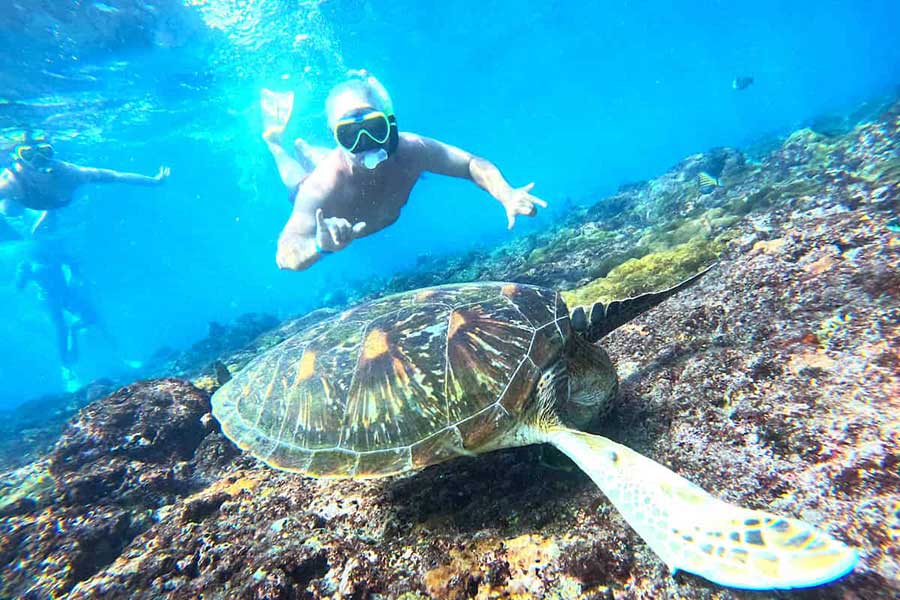
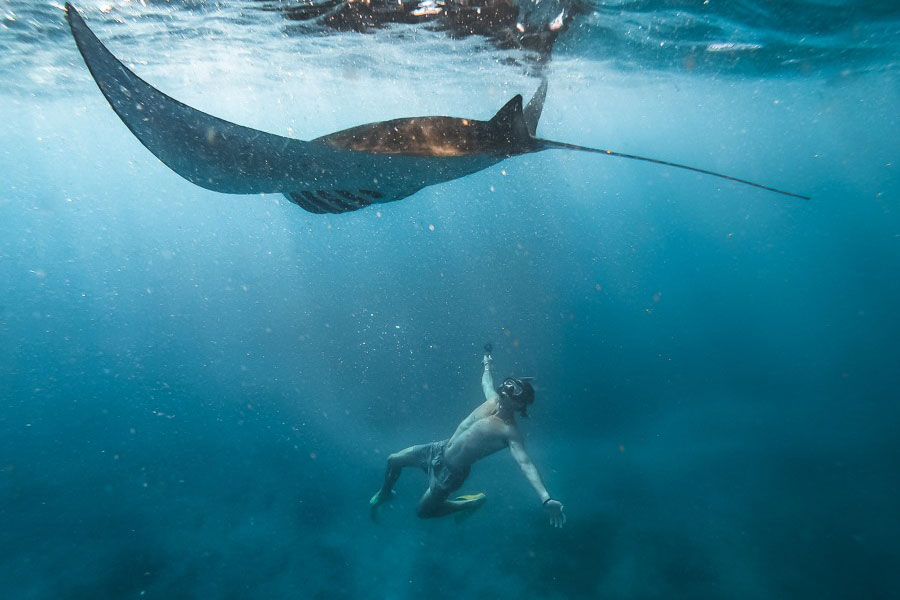
Thanks to its shallow water and calm surface conditions, manta bay nusa penida snorkeling ranks as one of the most accessible and popular marine excursions in Bali. Most people consider it the best manta ray spot for beginners who want to interact with these creatures without heavy scuba gear.
You simply gear up with a mask, snorkel, and fins, then step off the boat to find mantas feeding right beneath the surface. Travelers who join a standard manta bay tour nusa penida can easily witness this natural behavior from the surface, with great ambient light to see by.
Smaller Mantas vs Mature Individuals
One interesting ecological difference sets Manta Bay apart from Manta Point: the average size of the mantas you’ll encounter. Since it’s a shallow feeding ground, Manta Bay draws frequent visits from juvenile or smaller manta rays. They move in highly energetic, erratic patterns, swooping and barrel-rolling near the surface to filter plankton.
For amateur underwater photographers, this is a real advantage. The shallow depth lets plenty of natural sunlight illuminate your shots.
| Factor | Manta Point | Manta Bay |
|---|---|---|
| Depth | 10–25 meters (deep) | 4–12 meters (shallow) |
| Currents & Swells | Strong ocean swell, high surge, colder water temperatures | Relatively calm, protected inside limestone coves |
| Best Suited For | Certified divers (Open Water+), pro photographers | Snorkelers, beginners, families & children |
| Snorkeling | Possible only during exceptionally calm seas | Highly recommended and ideal |
| Scuba Diving | Highly recommended for an immersive cleaning station experience | Feasible, but limited in space and depth variation |
| Manta Sighting Probability | Very high (~85–90%), mostly large, mature individuals | High (~75–80%), mostly younger or actively feeding mantas |
Which One Should You Choose?
Traveling with Non-Divers or Kids?
If you’re traveling with family, young kids, or a group where most people don’t hold a scuba license, book a manta bay tour nusa penida. The shallow, protected waters keep seasickness risk low and give novice swimmers a real sense of security, all while still delivering the thrill of swimming with megafauna.
Certified Diver Wanting Closer Encounters?
For certified divers, the best way to experience the true magic of the island is to dive Manta Point. Spending 45 minutes hovering effortlessly at 15 meters, watching an uninterrupted cleaning ritual, is a profound experience that surface snorkeling simply can’t replicate. Just come prepared for cooler water and the rhythmic push and pull of the ocean surge.
Want Both?
Can you experience both in one trip? Absolutely. When daily weather patterns, wind directions, and tidal ranges line up in our favor, a well-planned maritime expedition can take you to both sides of the island. That way, you get a firsthand manta ray site comparison bali in a single day.
Visit Both Sites in One Trip with Nusablu
At Nusablu, we don’t believe in a one-size-fits-all approach to ocean guiding. Every diver and snorkeler moves at their own pace, so why limit yourself to just one destination? Our team customizes itineraries around your comfort level and certification.
A highly experienced local dive guide commands every boat that leaves our dock, checking live weather radars, wind directions, and tide charts each morning.
We also maintain a strict small-group policy. That way, we can give guests dedicated safety supervision while keeping an eco-conscious distance from the manta rays, so our presence never stresses the marine life.
Conclusion
So, what’s the final verdict on Manta Point vs. Manta Bay? There isn’t a single “superior” choice. Instead, the perfect spot depends entirely on your underwater experience, your tolerance for open ocean conditions, and who you’re traveling with. Manta Point offers a majestic, deep-water theater for seasoned divers, while Manta Bay offers effortless, sunlit proximity for snorkelers and beginners alike.
The secret to a successful marine adventure in Nusa Penida lies in flexibility and expert local knowledge. With proper preparation and the right guiding team by your side, your encounter with the manta rays will undoubtedly become a lifelong highlight.
Ready to Swim with the Manta Rays of Nusa Penida?
Don’t leave your dream holiday to chance, and don’t risk picking a spot that doesn’t fit your skill level. Let the seasoned professionals at Nusablu craft your ultimate ocean escape. With dedicated local dive guides, low-ratio small groups, and live, daily tracking of manta point diving conditions, we’ve got your safety and enjoyment fully covered.
Frequently Asked Questions (FAQ)
What is the difference between Manta Point vs Manta Bay?
Manta Point is a deep-water marine cleaning station (10–25m) on Nusa Penida’s southern coast, exposed to open ocean swells, so it suits certified scuba divers best. Manta Bay, in contrast, is a series of shallow, protected coves (4–12m) on the northwest coast that mantas use as a feeding ground, making it perfect for surface snorkeling.
Which is better for beginners?
Manta Bay is, without question, the best manta ray spot for beginners. The water is shallow, the surrounding cliffs block major winds, and conditions stay forgiving for anyone not fully accustomed to open water.
Can you snorkel at Manta Point?
Yes, manta point snorkeling trips happen fairly often, but ocean conditions strictly govern whether they go ahead. If the southern swell is running high, the intense surface motion can turn hazardous for snorkelers, so our guides reroute to safer areas.
Is a manta ray sighting guaranteed?
Since manta rays are wild animals moving freely through the ocean, no one can guarantee a 100% sighting. That said, because Nusa Penida is a permanent sanctuary for them, our sighting success rate at both Manta Point and Manta Bay stays between 80% and 90% year-round when we depart at the right time of day.
Can I visit both in one day?
Yes, and it’s completely achievable through custom or private charter bookings. By running our own manta bay vs manta point assessments daily, Nusablu frequently combines both sites into a single itinerary whenever the sea state permits.