
Snorkeling in Bali: 10 Tips for a Better Underwater Adventure
Gliding over vibrant coral reefs and floating alongside tropical marine creatures is one of the most rewarding ways to experience the Indonesian archipelago. To make the most of snorkeling in Bali with 10 practical tips for better comfort, confidence, safety, and unforgettable underwater experiences, travelers need to focus on thoughtful preparation rather than just finding clear water. While many visitors start by researching where to go, how you prepare and move in the ocean plays a much larger role in shaping your day. From mastering your equipment to understanding water conditions, small adjustments can transform a rushed swim into a relaxed, memorable adventure.
Why Preparation Matters Before Snorkeling in Bali
A great day in the water rarely happens by accident. Proper snorkeling preparation Bali style involves understanding your personal comfort level, getting accustomed to gear beforehand, and respecting the environment you are about to enter.
Ocean conditions around the island vary dramatically depending on the tide, weather, and topography. A bay that sits calm and glass-like in the morning may develop moderate surface chop or shifting currents by early afternoon. Taking ten minutes before entering the water to assess your physical fitness, check gear fit, and listen carefully to your guide establishes a safe foundation. When you feel prepared on land, you spend far less energy worrying once floating above the reef.
1. Start With the Right Mindset
Snorkeling is an exercise in slowing down. It is not a race to swim as far or as fast as possible, nor is it a performance.
One of the most effective Bali snorkeling tips is simply allowing yourself time to settle after stepping off a boat or entering from the shore. Rapid kicking and tense muscle movements burn unnecessary oxygen and tend to scare away marine life. When you first enter the water, float quietly on the surface for a moment. Let your eyes adjust to the mask view, take slow breaths, and let your arms relax by your sides. Approaching the ocean with a patient mindset conserves your physical energy and allows underwater life to continue its natural routines around you.
2. Get Comfortable With Your Mask and Snorkel
Equipment frustration is the single most common distraction for travelers exploring shallow reefs. A leaking mask or a flooded breathe-pipe can turn a beautiful swim into an exhausting ordeal.
Check the Mask Fit
Before getting wet, place the mask frame against your face without using the strap. Inhale gently through your nose. If the mask stays sealed against your skin through light suction, it fits your facial structure. Avoid pulling the rubber strap too tightly around your head, as excessive pressure distorts the silicone skirt and actually creates leaks rather than preventing them.
Practice With the Snorkel
Becoming comfortable with breathing solely through your mouth requires a short adjustment period. Practicing with a snorkel in shallow, standing-depth water allows you to test the seal and practice clearing small splashes of water using a firm, quick exhalation. For anyone trying snorkeling Bali for beginners, spending five quiet minutes in the shallows before floating out toward deeper reef slopes makes a significant difference in personal confidence.
3. Learn to Control Your Breathing
Breathing through a silicone tube feels unfamiliar at first because human instinct resists inhaling while submerged. Developing a calm, rhythmic breathing pattern is the primary key to staying relaxed.
Focus on long, deep inhalations followed by complete, unhurried exhalations. Rapid, shallow breathing creates a feeling of air starvation and can trigger unnecessary panic, even in gentle water. If you feel your heart rate increasing, turn onto your back to rest or signal your swimming partner while keeping your airway clear. Mastering this basic element of beginner snorkeling Bali ensures you conserve energy, maintain steady buoyancy, and enjoy extended time exploring the reef.
4. Master Your Fin Technique
Fins provide efficient propulsion, but using them incorrectly leads to fast fatigue and potential reef damage. Proper kicking technique relies on smooth, deliberate movements generated from the hips rather than the knees.
Avoid bicycle-style kicking, which pushes water inefficiently and forces your feet downward toward fragile corals. Instead, keep your legs relatively straight with a slight bend at the knees, pointing your toes backward like a swimmer. Extended, slow flutter kicks move you smoothly across the surface without kicking up sand or disturbing other snorkelers nearby.
5. Learn to Read the Ocean
The ocean surrounding Bali is dynamic, powered by coastal swells and deep oceanic channels. Developing basic water awareness helps ensure a safe snorkeling Bali outing every time.
Before entering, observe surface conditions closely:
- Look for wave patterns along entry points and shallow reef tops.
- Pay attention to surface drift and water clarity.
- Note where the boat is anchored relative to the current.
Water conditions change throughout the day. Always attend pre-dive briefings provided by your crew, pay attention to entry and exit instructions, and stay mindful of how far current movement may carry you away from your group.
6. Don’t Chase Marine Life
Observing animals in their natural habitat is a privilege that requires respectful boundaries. Marine creatures have sharp senses and will quickly swim away if they feel crowded or cornered.
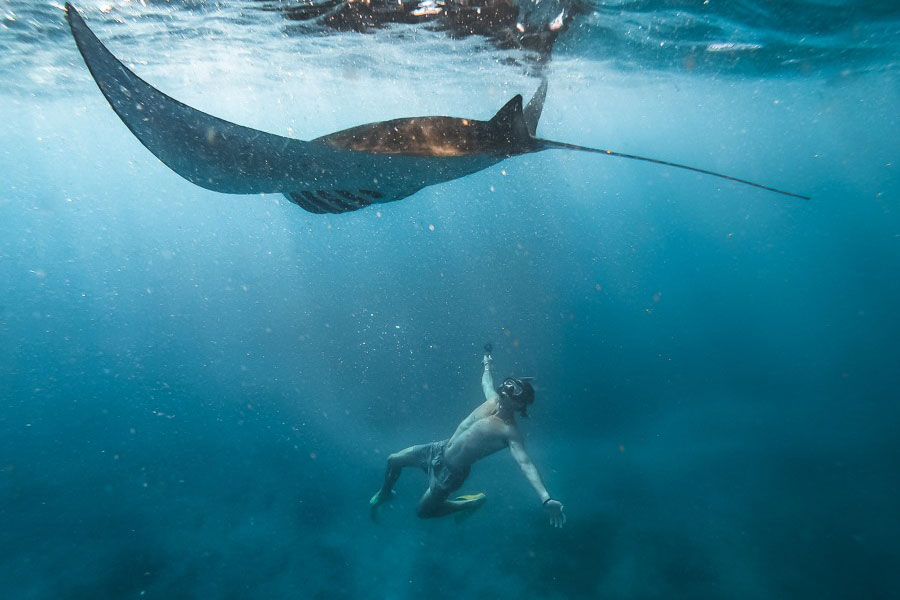
When swimming near turtles, reef fish, or during an excursion focused on snorkeling with manta rays Bali, maintain a respectful distance. Never reach out to touch, ride, or chase animals. Position yourself off to the side rather than directly above or in front of an approaching ray or turtle, giving them an unobstructed path to feed or surface for air. Passive observation rewarded with patience almost always yields longer, closer, and more natural wildlife encounters.
7. Look Beyond the Big Animals
While large pelagic encounters receive plenty of attention, the true foundation of local waters lies in the extraordinary complexity of the shallow reefs.
Taking time to closely examine coral formations reveals a dense world of intricate activity. Scan table corals, sea anemones, and rocky crevices to spot colorful nudibranchs, territorial damselfish, juvenile sweetlips, and well-camouflaged octopus. Broadening your appreciation for Bali marine life transforms every swim into an engaging treasure hunt, ensuring a memorable experience even when larger creatures are not in view.
8. Know When to Take a Break
Floating on the ocean surface uses core stabilization muscles and constantly exposes your body to sun, wind, and ambient water temperatures. Recognizing early signs of tiredness prevents unnecessary stress.
Listen to your body and exit the water or return to the boat if you experience:
- Persistent muscle cramps in your calves or feet.
- Shivering or feeling unusually cold.
- Difficulty clearing your mask or maintaining steady breathing.
- General fatigue or anxiety.
Taking regular breaks to hydrate and rest on deck is an essential part of an enjoyable Bali snorkeling experience. Recognizing your personal limits allows you to stay safe and energized for the entire outing.
9. Choose a Guide Who Knows the Local Water
Navigating coastal currents, entry channels, and changing tides is much easier alongside an experienced local guide. Professional guides understand micro-conditions, marine behavioral patterns, and proper safety procedures.
Joining a professionally guided snorkeling tour Bali ensures you visit areas appropriate for your skill level while benefiting from active surface supervision. A knowledgeable guide helps locate hidden marine life you might otherwise swim straight past and provides assistance if conditions shift unexpectedly. Operations like NusaBlu prioritize safety protocols, small group sizes, and local knowledge, helping travelers focus entirely on enjoying their underwater time.
10. Leave the Ocean Better Than You Found It
Tropical reefs face environmental pressure from climate change, coastal development, and high tourism volume. Every visitor shares a responsibility to protect these fragile marine habitats.
Practicing responsible snorkeling Bali principles means adhering to strict conservation habits:
- Wear reef-safe mineral sunscreen or use long-sleeve rashguards to minimize chemical runoff.
- Never stand on, kick, or hold onto live coral structures.
- Avoid taking shells, coral pieces, or sand as souvenirs.
- Refrain from feeding wild animals, which disrupts natural food chains.
- Secure all light personal trash on boats so it does not blow into the sea.
By leaving the environment untouched, you help preserve healthy marine ecosystems for local communities and future explorers.
Practical Snorkeling Checklist
Use this quick checklist to review your preparations before stepping off the deck:
Before Entering the Water
- Test mask seal and strap tension on dry skin.
- Apply mineral reef-safe sunscreen or put on a UV rashguard.
- Listen carefully to the captain’s and guide’s safety briefing.
- Confirm entry and exit procedures with your buddy.
While in the Water
- Breathe slowly and establish comfortable buoyancy.
- Use smooth, long kick cycles from your hips.
- Keep a minimum three-meter distance from marine animals and coral heads.
- Look up periodically to check your position relative to the boat or shore.
After Exiting
- Rinse equipment in fresh water.
- Rehydrate with fresh water or electrolyte drinks.
- Store trash securely to prevent ocean debris.
Finding Your Rhythm Underwater
A great day on the water is defined by how relaxed, observant, and respectful you are in the marine environment. By prioritizing equipment preparation, steady breathing, efficient kick mechanics, and ocean safety, you can turn any reef swim into an effortless exploration. Remember to slow down, stay aware of your surroundings, and follow local conservation practices. If you are looking for guided adventures led by local experts who value safety and marine protection, explore your options with NusaBlu to plan your next underwater outing.
Frequently Asked Questions
Is snorkeling in Bali suitable for beginners?
Yes. Many coastal areas feature shallow, protected bays with gentle entries that are ideal for first-time snorkelers. Choosing an area matched to your current swimming ability and joining a guided outing ensures a safe, comfortable introduction.
What should I know before snorkeling in Bali?
Understand that ocean conditions shift with tides and weather. Equipping yourself with a well-fitting mask, learning to breathe calmly, respecting marine life, and listening to local boat crews are key factors in having a successful swim.
Is snorkeling in Bali safe?
Snorkeling is generally very safe when conducted responsibly. Safety depends on staying within your personal limits, paying attention to current movements, using appropriate flotation equipment if needed, and swimming with a guide or buddy.
Can I see manta rays while snorkeling in Bali?
Manta rays inhabit coastal waters near coastal islands such as Nusa Penida. Sightings depend on plankton currents, sea conditions, and seasonal movements, meaning encounters can never be absolute guaranteed.
Do I need to know how to swim to go snorkeling?
Basic swimming ability and water comfort are strongly recommended. If you are not a strong swimmer, wearing a fitted snorkel vest or life jacket allows you to float effortlessly while remaining under professional guide supervision.
How can I snorkel responsibly in Bali?
Use reef-safe sunscreen, maintain good buoyancy control to avoid kicking coral, never touch or chase marine life, and avoid taking anything out of the ocean.